task:
New construction of a multi-storey residential building with reinforced concrete skeleton construction, comprising 116 flats and 8 residential offices, as well as an underground car park
client:
Project development LP 1-4: Implenia Marienplatz Hochhaus GmbH, Raunheim
Implementation LP 5-8: Implenia Hochbau GmbH, Major Projects Division, Raunheim
procedure type:
Concept award following the Marienplatz 2019 urban development competition 2019, 1st prize
Award following the Marienplatz 2022 high-rise building invitation-only competition, 1st prize
size:
approx. 17.700 sqm above-ground gross floor area R+S
completion:
planned 2029
technical planner competition:
bauart (Fire protection) | transsolar (Energy concept) | GTL (landscape architects) | tragraum (structural engineering competition) |
technical planner realization:
Fast + Epp GmbH (structural engineering) IGP Ingenieure (building services engineering)/electrical) | SGS Engineering GmbH (acoustics/ thermal building physics) | GTL Landschaftsarchitektur Part mbB (landscapearchitects) | HTA-Sachverständigenbüro (fire protection) | Arcadis Germany GmbH (ground surveyor) | Hess Timber GmbH (Consulting on timber construction) |
team:
Andrea Weber (pl), Moritz Bayer, Mariana Georgieva, Tim Heidland, Kathrein Hildebrandt, Hannah Jacobs, Isabelle Pertack, Alexander Grams (freie MA), Ann-Catrin Schleifer (freie MA), Toka Mohamed (stud.), Jan Tovar (stud.)
visualizations:
luxfeld digital art, Darmstadt |
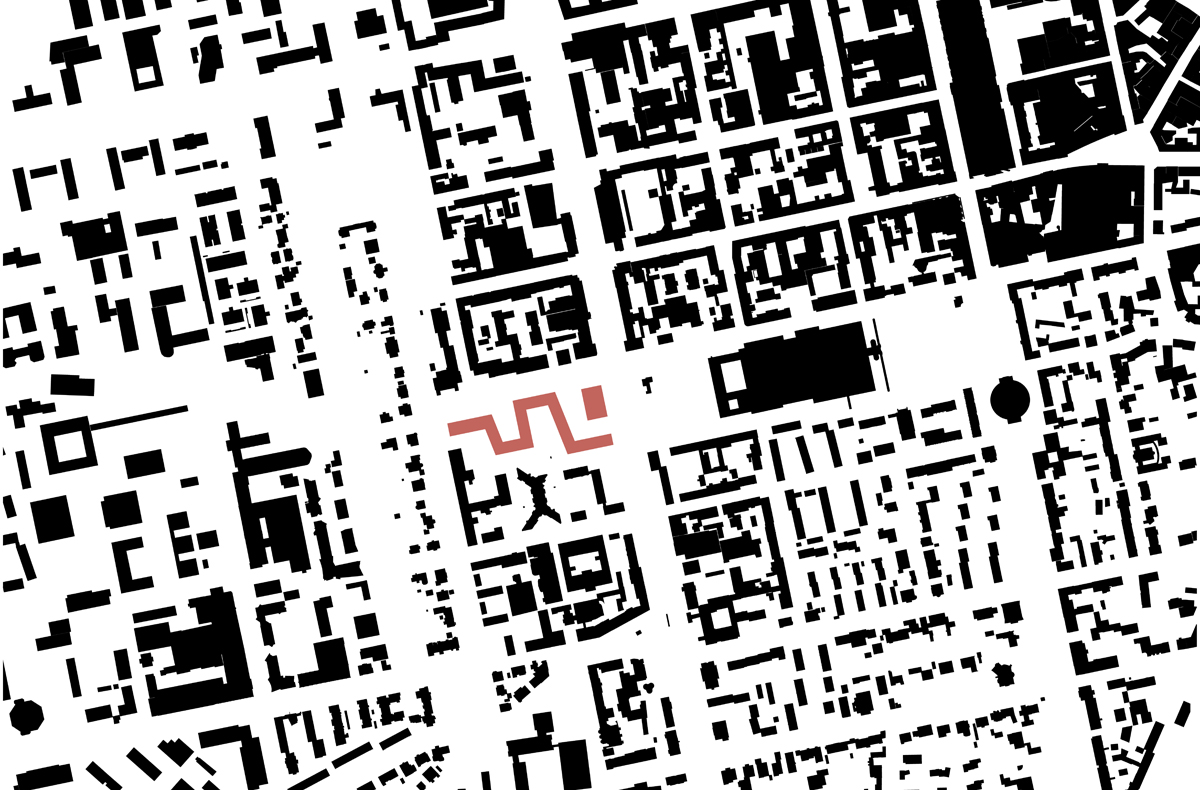
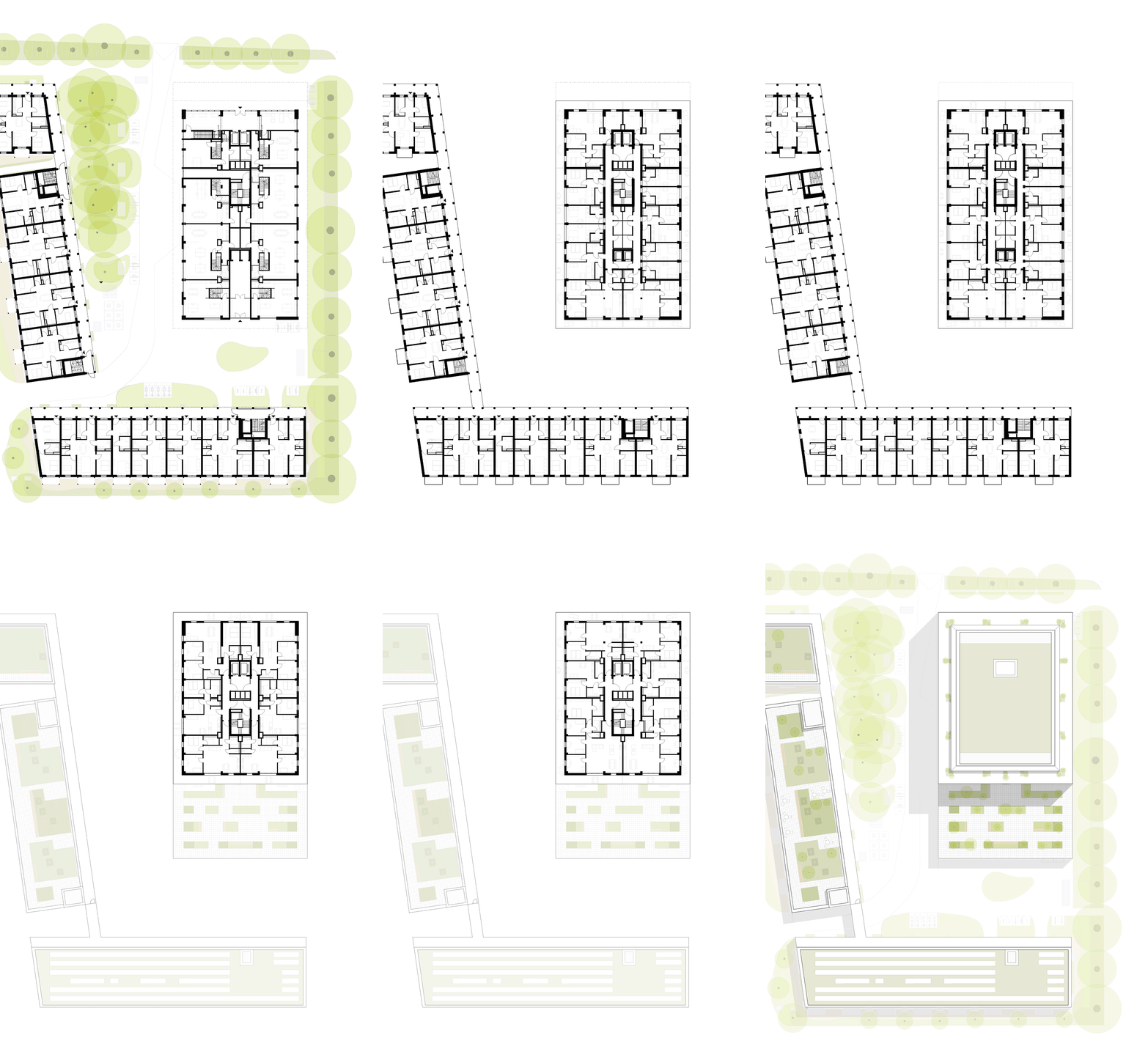
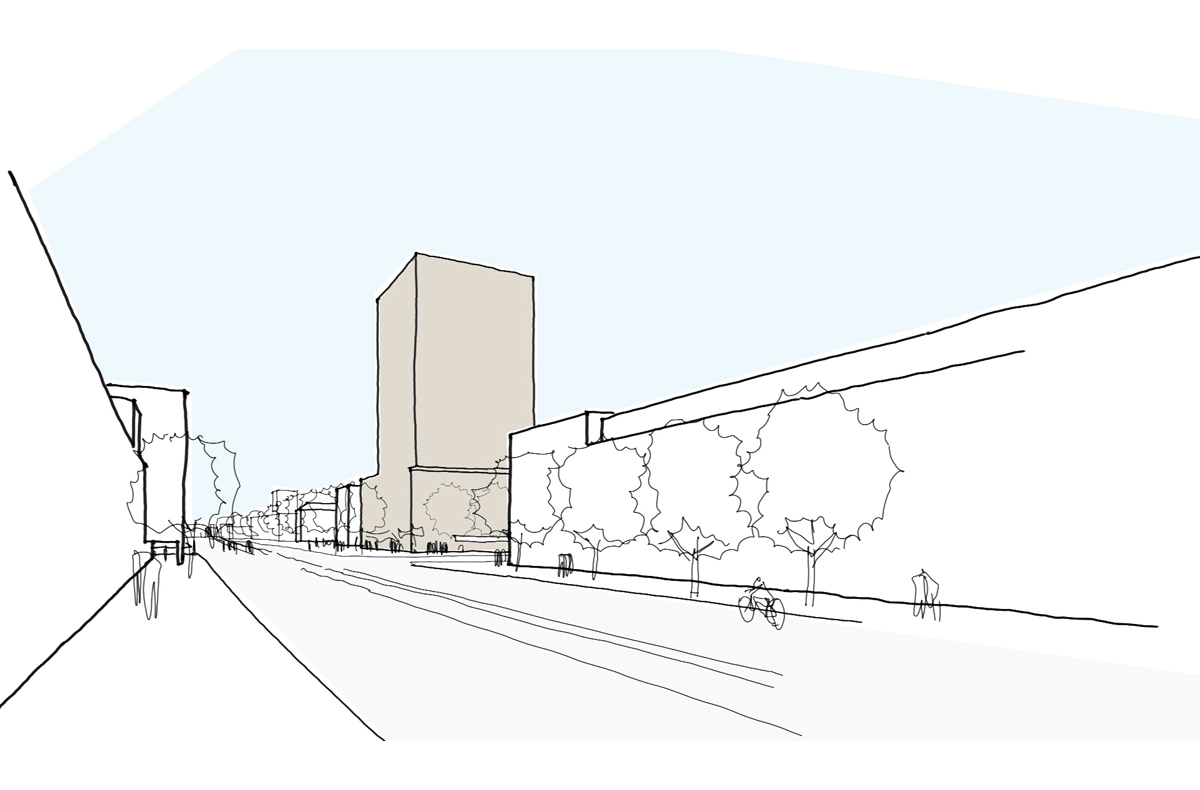
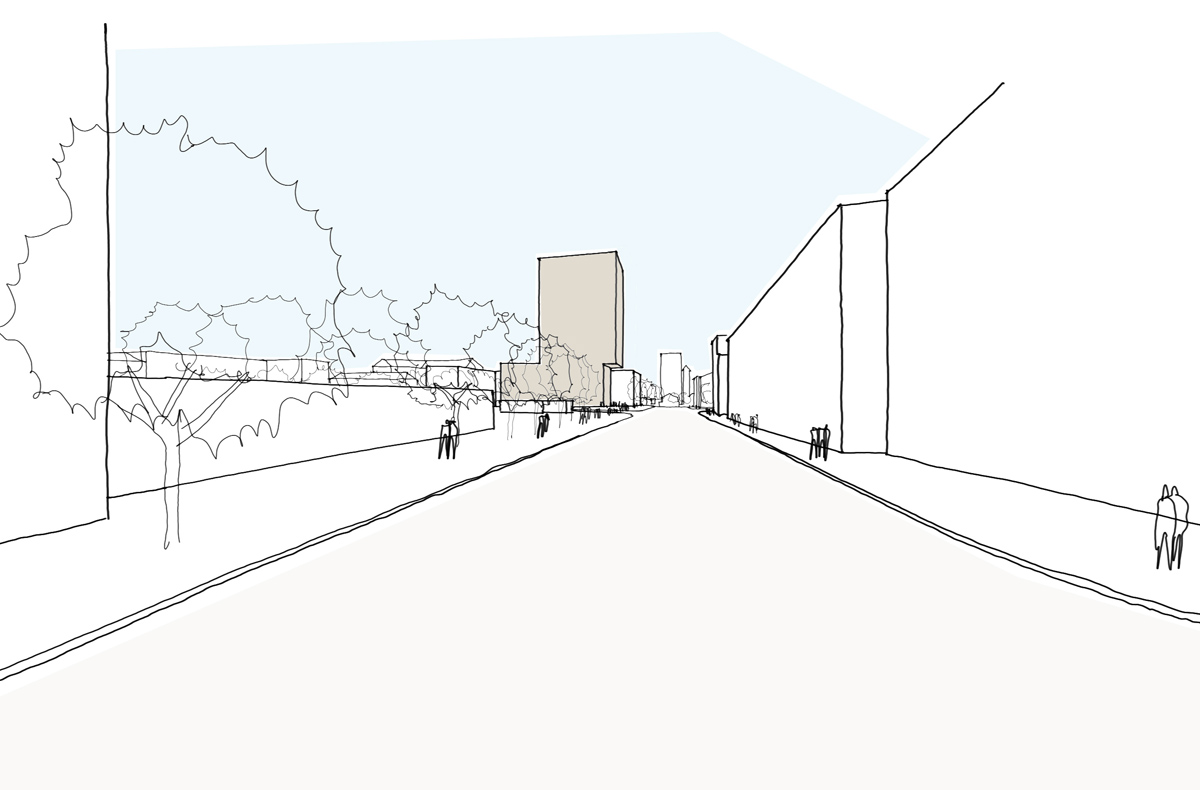
The central complex “Marienplatz Darmstadt” connects Darmstadt city centre with the so-called publishing district and the campus of Darmstadt University of Applied Sciences. On the city side, this important east-west connection begins at its highest point with the residential high-rise, from which a promenade leads westwards along the meandering development (multi-storey residential building) and the adjacent daycare centre to Fritz-Bauer-Straße.
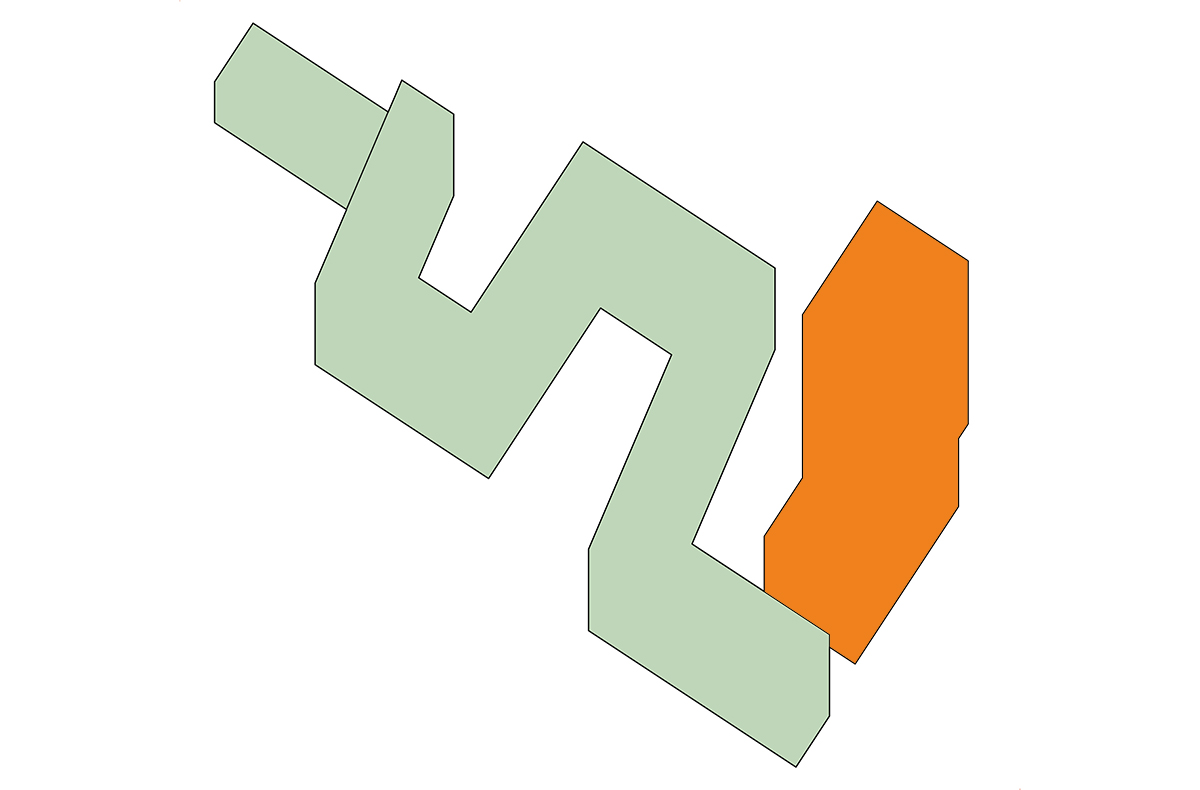
The urban ensemble is being developed by three builders on three separate plots: high-rise (Implenia Marienplatz Hochhaus GmbH), Mäander (Implenia II. Marienplatz Mäander GmbH) and daycare centre (City of Darmstadt).
The outdoor areas of the residential development are zoned by the shape of the buildings. The open spaces of the Mäander and high-rise buildings merge into one another; they are not fenced off, but are accessible to the public throughout.
The communal roof gardens of the Mäander and the base of the high-rise building are at a similar height and form a second open space level. The Mäander and high-rise buildings are also connected by a shared basement and underground car park.
In the west, the daycare centre continues the meandering structure. However, it is structurally and functionally independent.
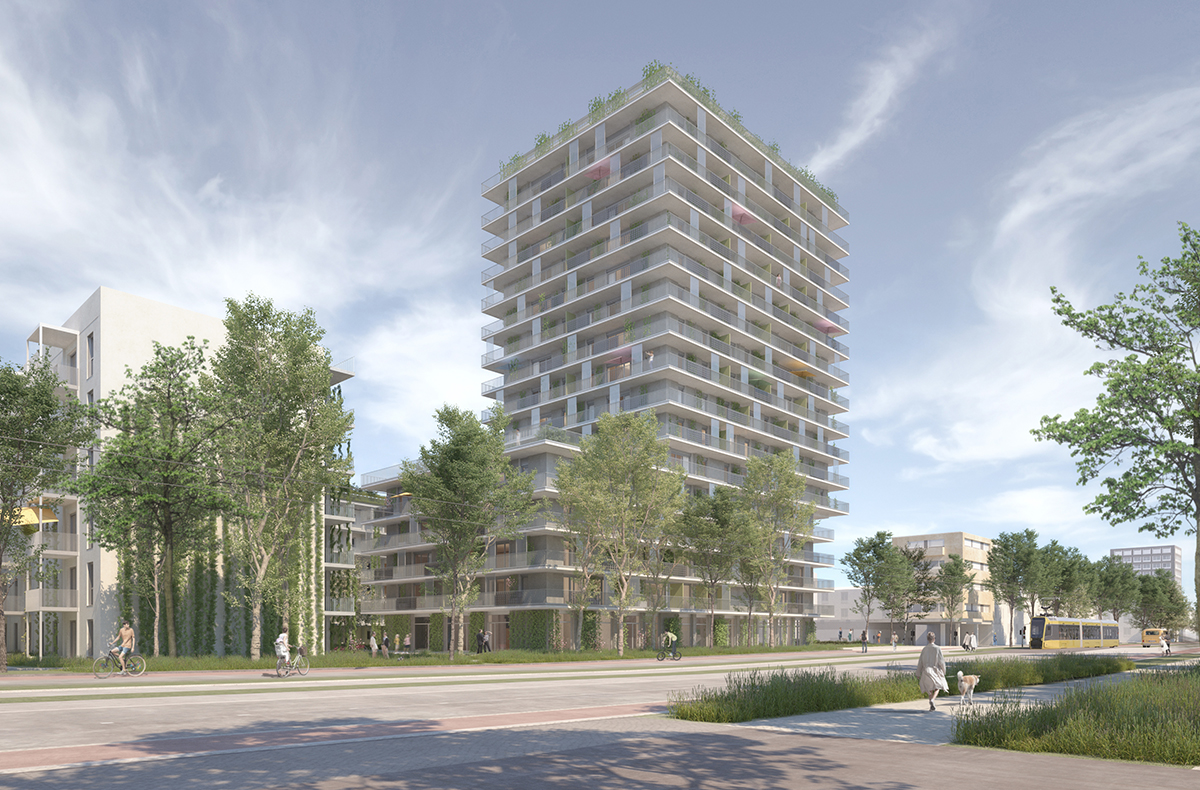
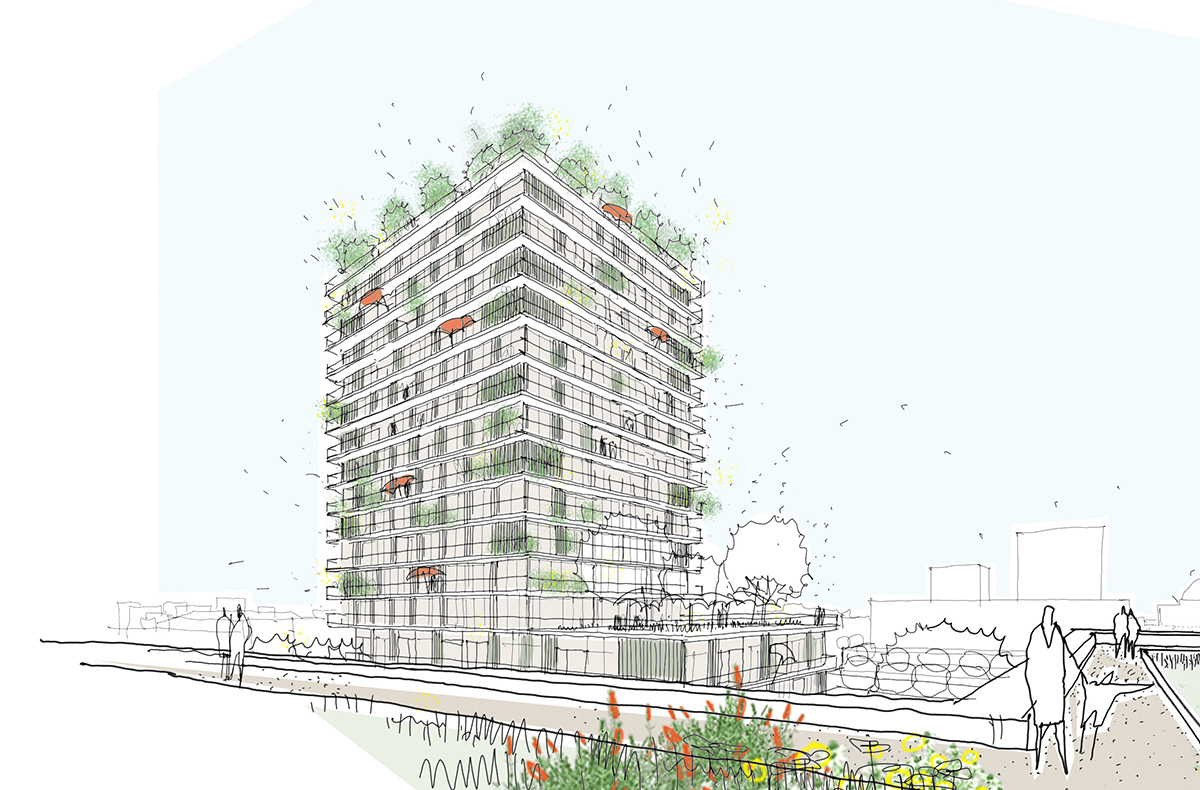
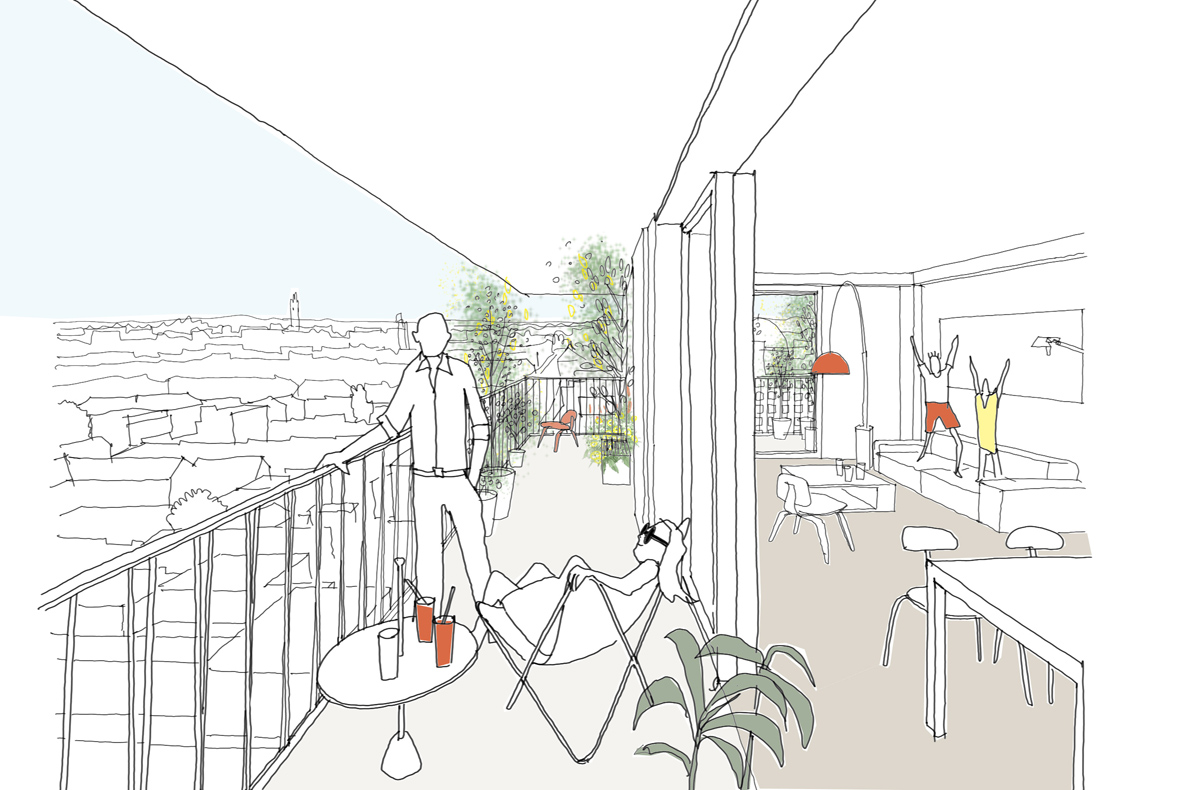
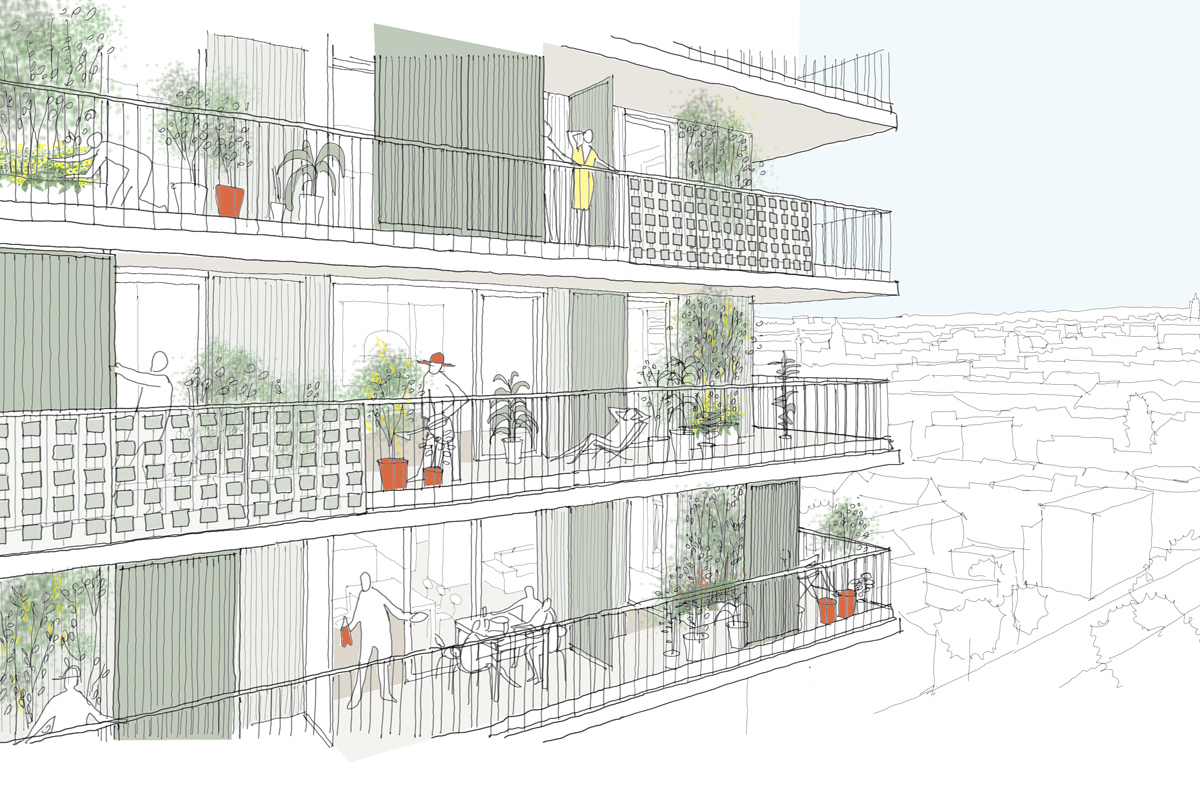
The appearance of the high-rise building is characterised by the horizontal bands of its surrounding balconies.
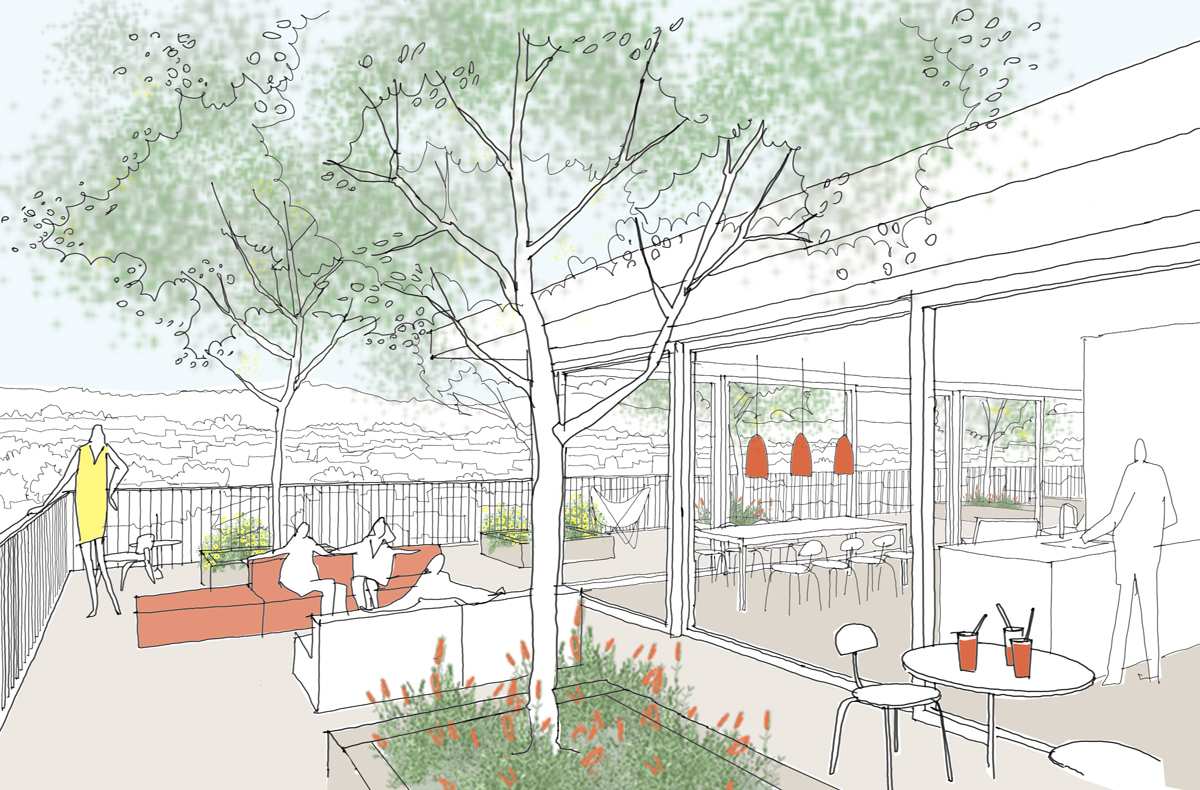
Balcony plantings on all floors, green facades on the ground floor and plantings of small trees and shrubs on the roof terraces integrate the building into the intensively green surroundings of Marienplatz.
The 16-storey building (plus penthouse as a staggered storey) is located on the corner of Hügelstraße/Heidelberger Straße facing the city centre and forms a public forecourt to the north with its recessed base and the cantilevered structure above (11 full storeys). The base building (5 full storeys) creates an urban connection to the Mäander.
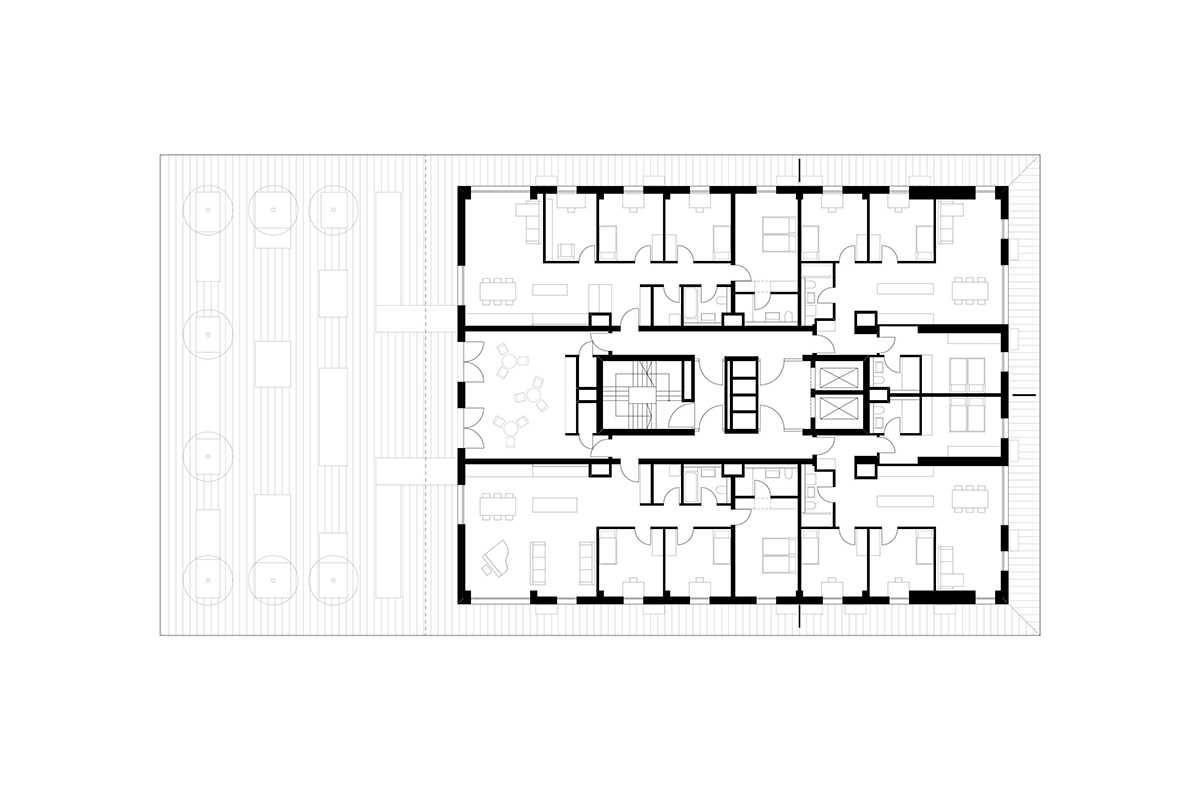
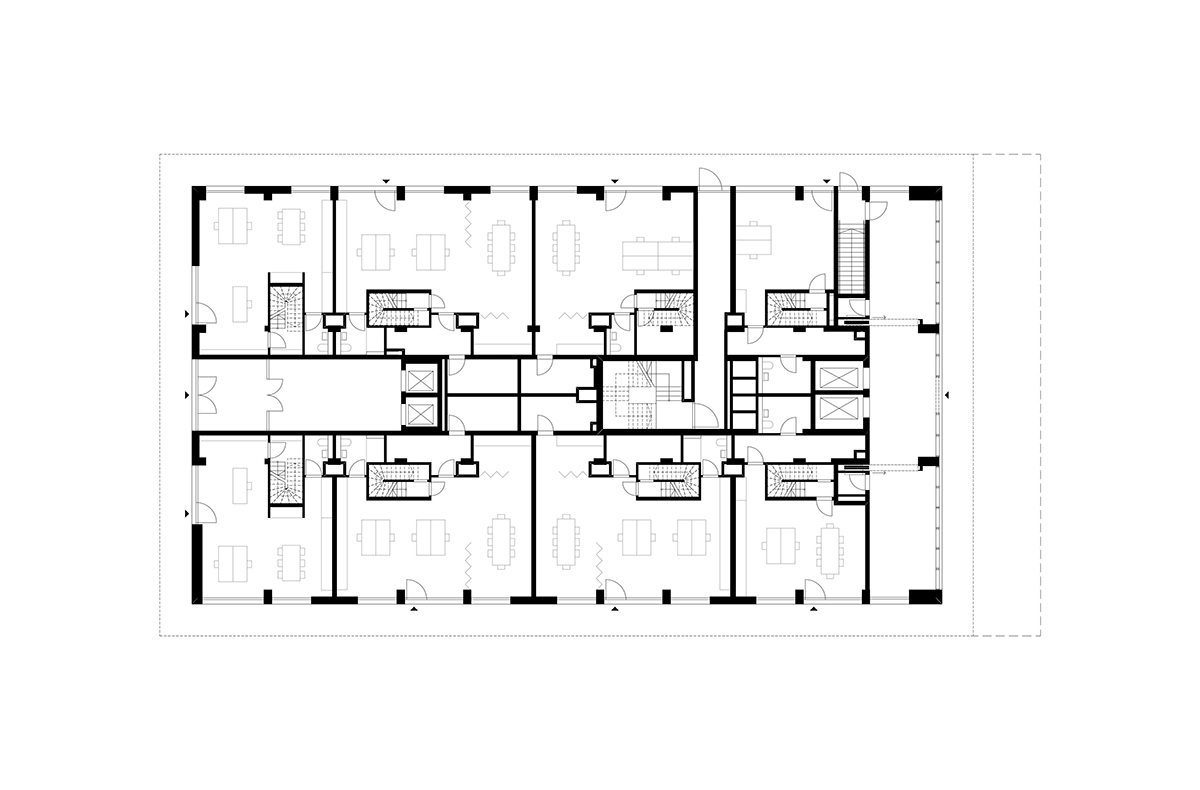
There are two main entrances on the ground floor: one in the north for residents of the 5th to 16th floors and one in the south for residents of the ground floor to 4th floor. In addition to the foyer areas, the eight two-storey residential office units can also be accessed directly from the outdoor areas.
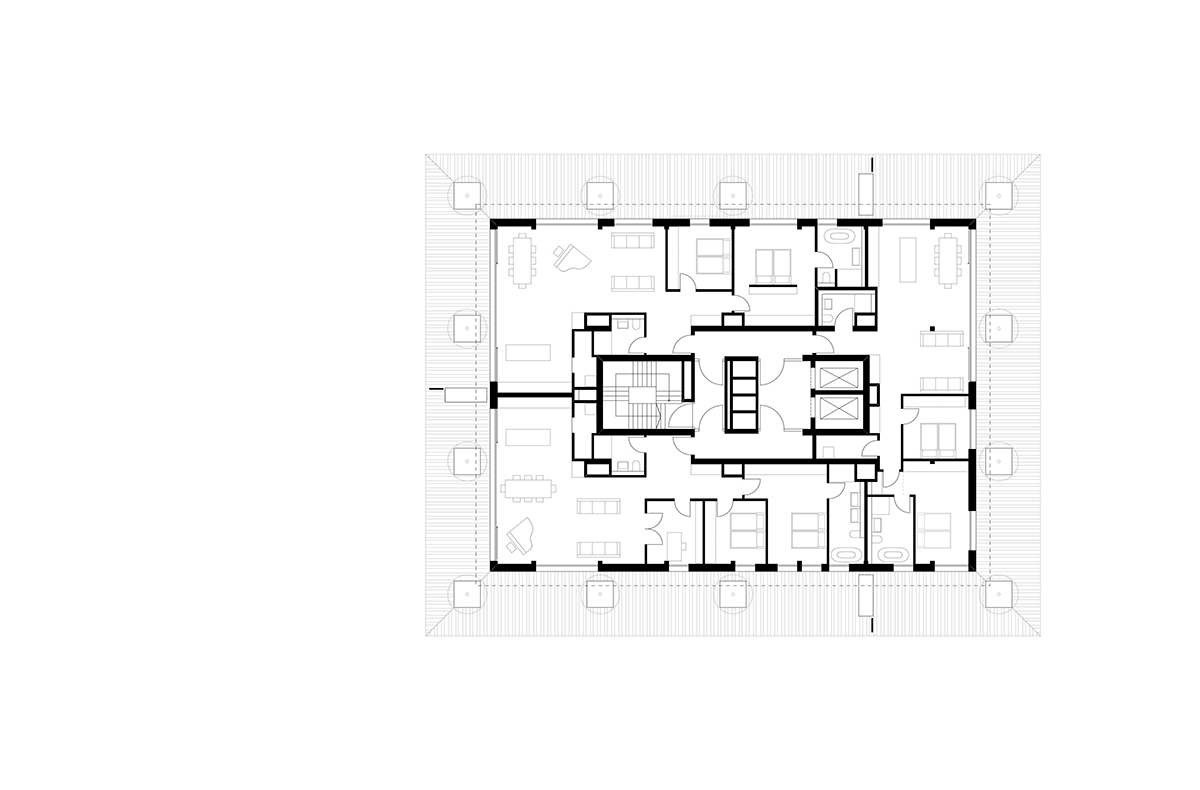
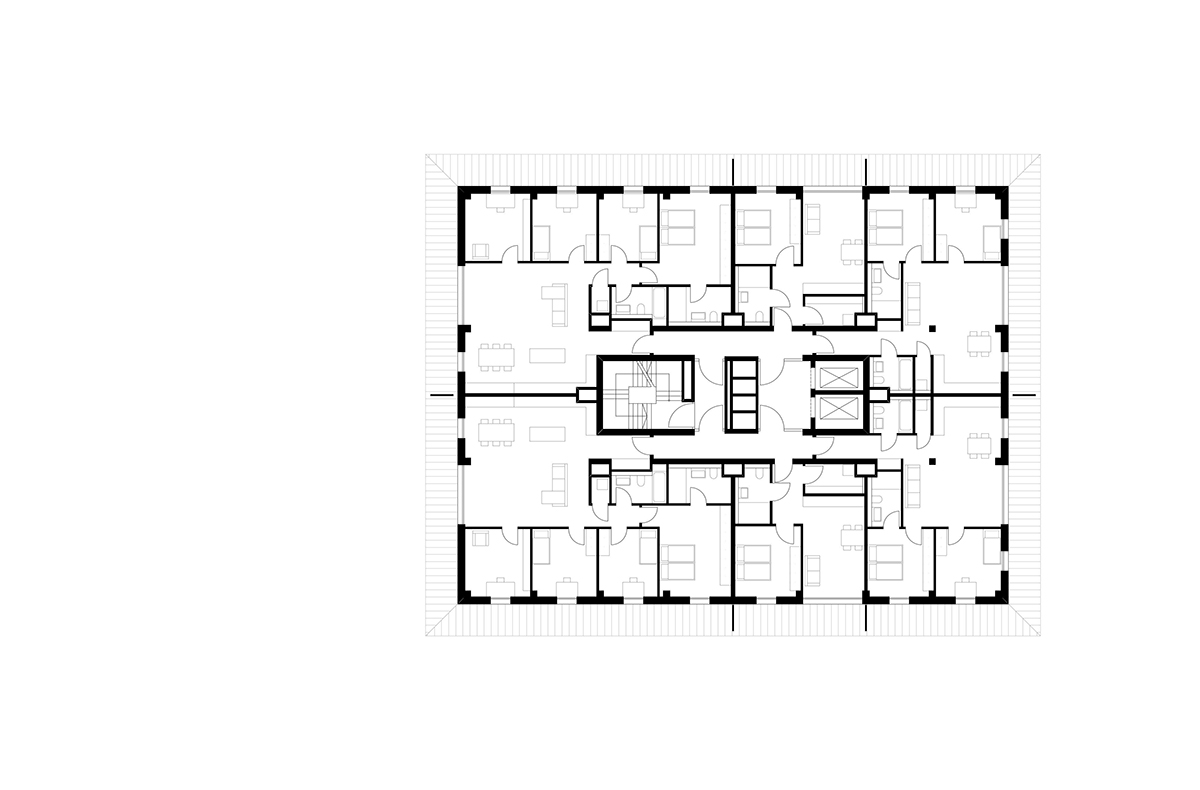
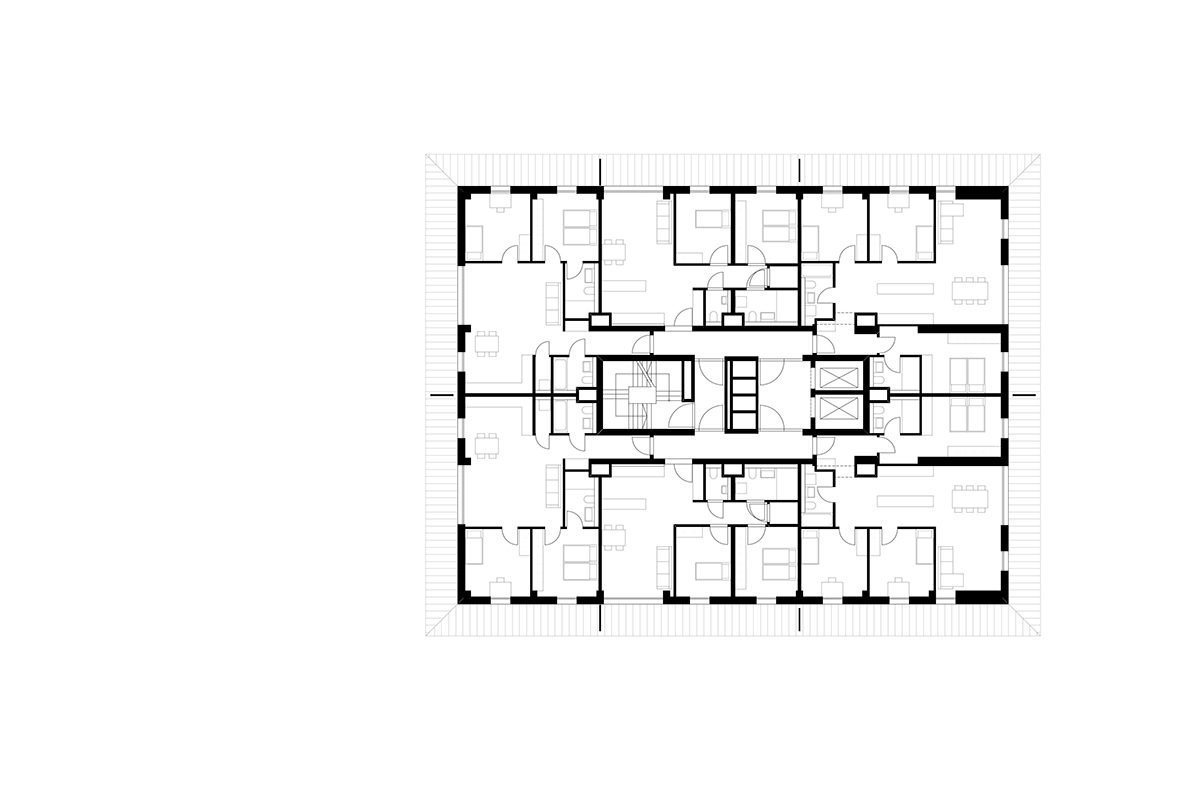
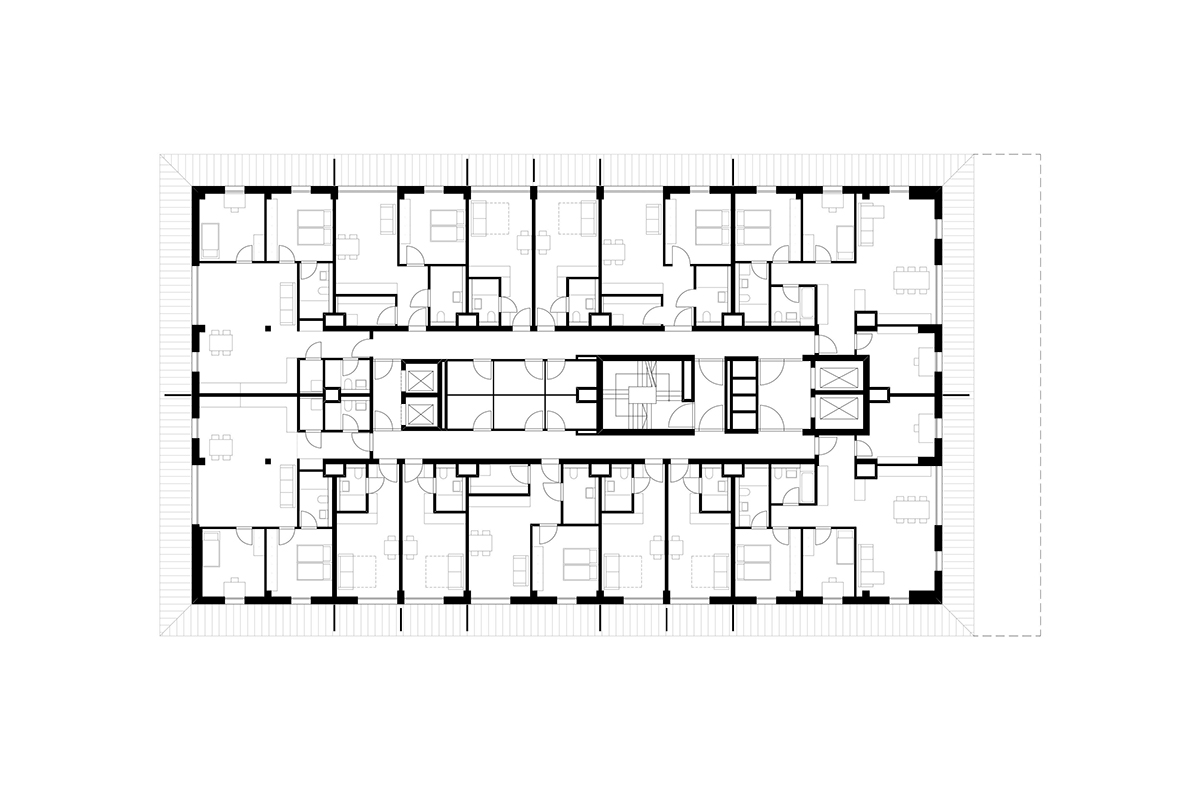
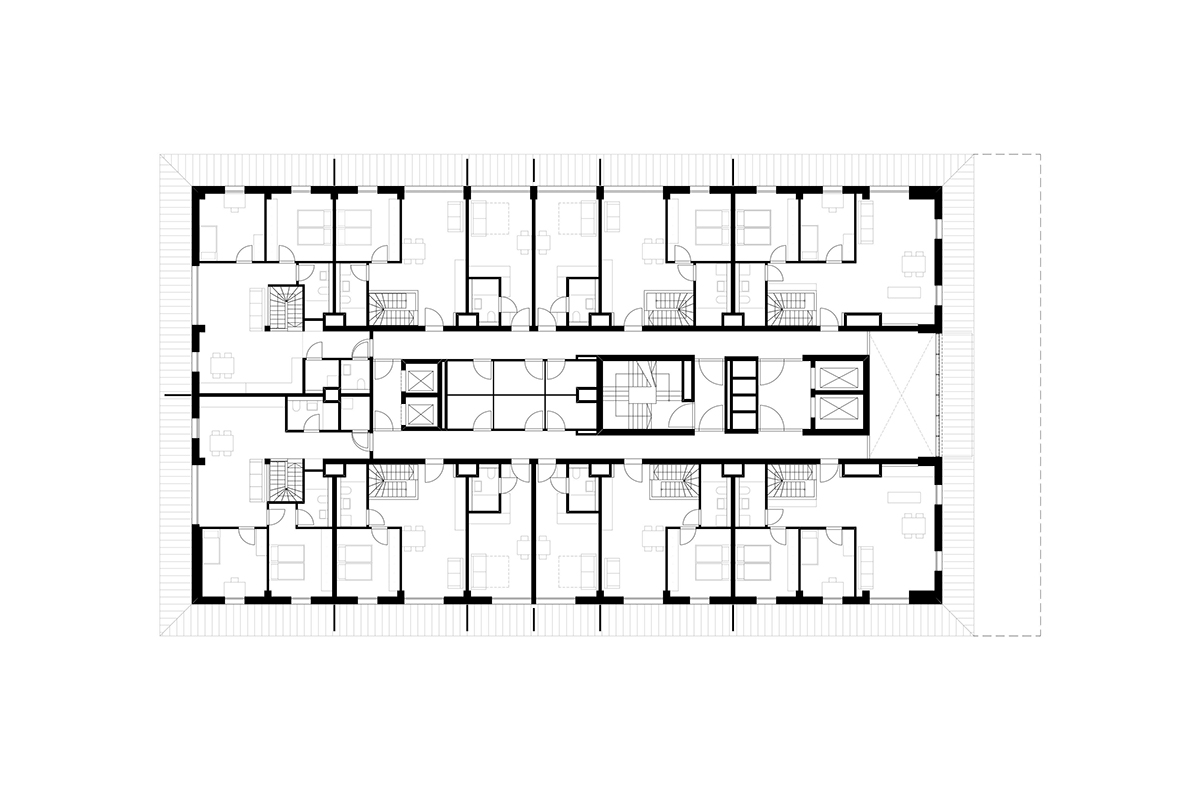
The high-rise building is designed with a reinforced concrete skeleton structure and non-load-bearing exterior walls in lightweight steel construction. Vertical access is provided by a core with a security stairwell and two lifts in the north, as well as two lifts in the south.
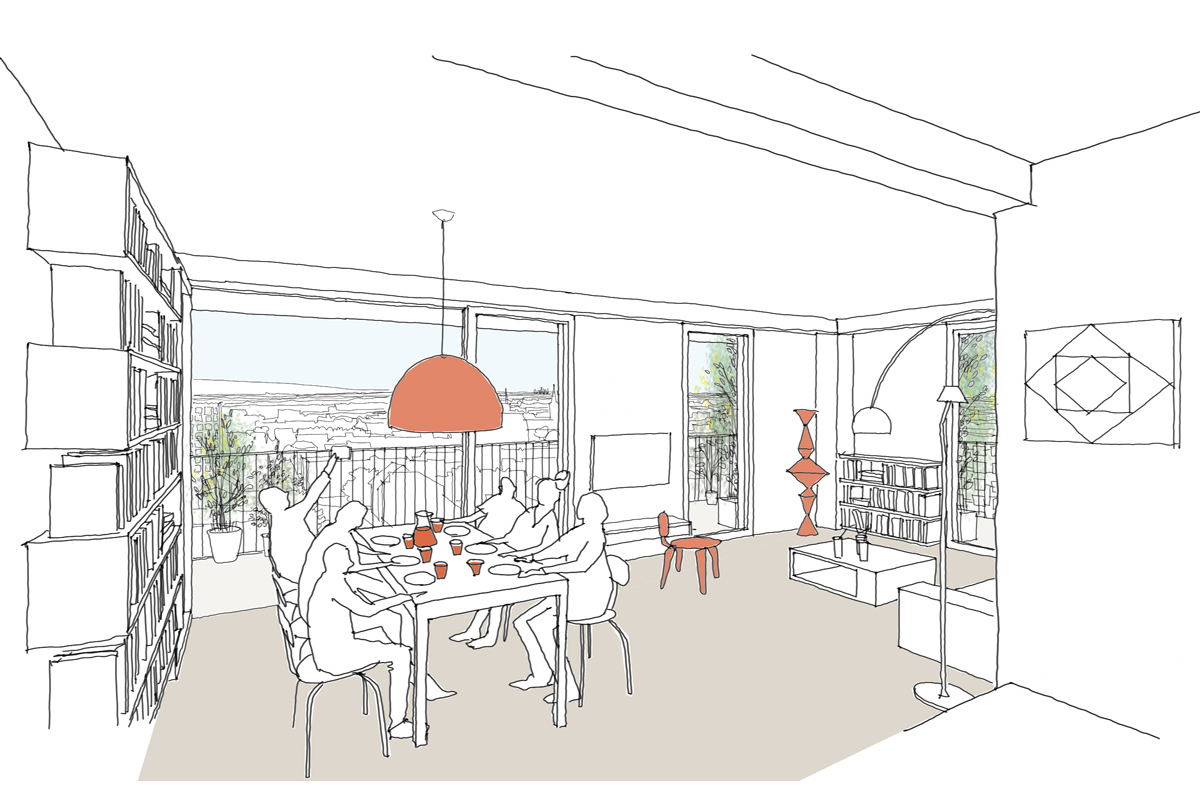
Different types of apartments (1 to 5 rooms) are arranged around the core.
The reinforced concrete skeleton structure is highly prefabricated.
The load-bearing floor slabs are designed as semi-precast constructions (filigree ceiling elements with in-situ concrete additions) with a span of 7.50 m in both directions. The floors rest on prefabricated beams. Vertical load transfer is via the access core and some walls in stiffening axes, as well as the reinforced concrete columns in the axis grid. The prefabricated balcony elements, which cantilever freely around the perimeter, are integrated into the floor structures by means of isokörbe (insulation baskets).
The energy concept is based on the use of district heating, which is distributed via the floor surfaces. These same surfaces can also be used to cool the building in summer (with the aid of absorption cooling).
Photovoltaics on the roof surfaces supply electricity for the operation of the building services.
The central complex “Marienplatz Darmstadt” connects Darmstadt city centre with the so-called publishing district and the campus of Darmstadt University of Applied Sciences. On the city side, this important east-west connection begins at its highest point with the residential high-rise, from which a promenade leads westwards along the meandering development (multi-storey residential building) and the adjacent daycare centre to Fritz-Bauer-Straße.
The urban ensemble is being developed by three builders on three separate plots: high-rise (Implenia Marienplatz Hochhaus GmbH), Mäander (Implenia II. Marienplatz Mäander GmbH) and daycare centre (City of Darmstadt).
The outdoor areas of the residential development are zoned by the shape of the buildings. The open spaces of the Mäander and high-rise buildings merge into one another; they are not fenced off, but are accessible to the public throughout.
The communal roof gardens of the Mäander and the base of the high-rise building are at a similar height and form a second open space level. The Mäander and high-rise buildings are also connected by a shared basement and underground car park.
In the west, the daycare centre continues the meandering structure. However, it is structurally and functionally independent.
The appearance of the high-rise building is characterised by the horizontal bands of its surrounding balconies.
Balcony plantings on all floors, green facades on the ground floor and plantings of small trees and shrubs on the roof terraces integrate the building into the intensively green surroundings of Marienplatz.
The 16-storey building (plus penthouse as a staggered storey) is located on the corner of Hügelstraße/Heidelberger Straße facing the city centre and forms a public forecourt to the north with its recessed base and the cantilevered structure above (11 full storeys). The base building (5 full storeys) creates an urban connection to the Mäander.
There are two main entrances on the ground floor: one in the north for residents of the 5th to 16th floors and one in the south for residents of the ground floor to 4th floor. In addition to the foyer areas, the eight two-storey residential office units can also be accessed directly from the outdoor areas.
The high-rise building is designed with a reinforced concrete skeleton structure and non-load-bearing exterior walls in lightweight steel construction. Vertical access is provided by a core with a security stairwell and two lifts in the north, as well as two lifts in the south.
Different types of apartments (1 to 5 rooms) are arranged around the core.
The reinforced concrete skeleton structure is highly prefabricated.
The load-bearing floor slabs are designed as semi-precast constructions (filigree ceiling elements with in-situ concrete additions) with a span of 7.50 m in both directions. The floors rest on prefabricated beams. Vertical load transfer is via the access core and some walls in stiffening axes, as well as the reinforced concrete columns in the axis grid. The prefabricated balcony elements, which cantilever freely around the perimeter, are integrated into the floor structures by means of isokörbe (insulation baskets).
The energy concept is based on the use of district heating, which is distributed via the floor surfaces. These same surfaces can also be used to cool the building in summer (with the aid of absorption cooling).
Photovoltaics on the roof surfaces supply electricity for the operation of the building services.