task:
Interior refurbishment of a nursery
client:
City of Science Darmstadt
procedere type:
Negotiation procedure 2021
commissioning:
stages 1-9
size:
800 sqm (gross floor area)
completion:
2026
fachplaner:
Lenz Weber Ingenieure (fire protection, acoustics) | Schlier Ingenieure (structural engineering, building physics, energy concept) | IBL Ingenieurbüro Luéger
(electrical engineering) | Zeiger Consult (kitchen planning) | CDM Smith (pollutant analysis) | Tiede Ingenieurunternehmung (building services engineering)
team:
Fabian Mackeldey (PL), Uwe Neumeyer, Petra Lenschow, Martin Junglas (stud.), Toka Mohamed (stud.)
photos:
Fabian Mackeldey, Darmstadt
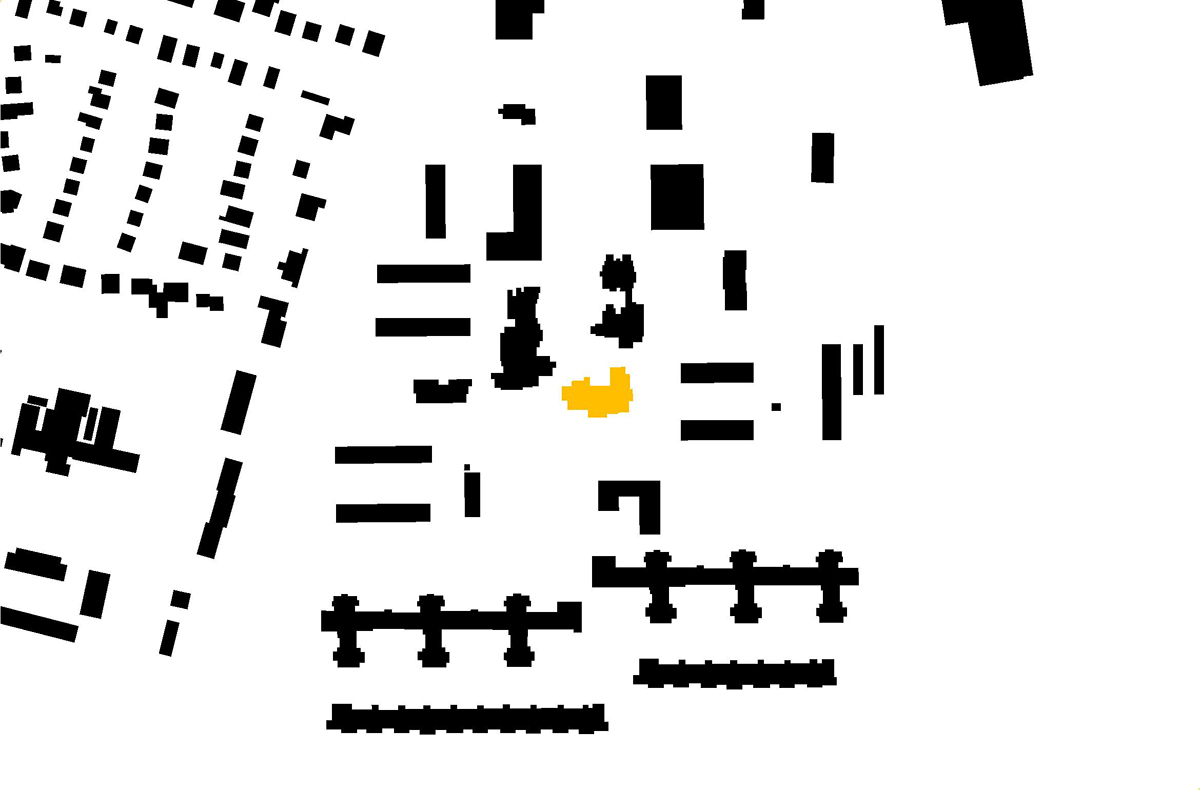
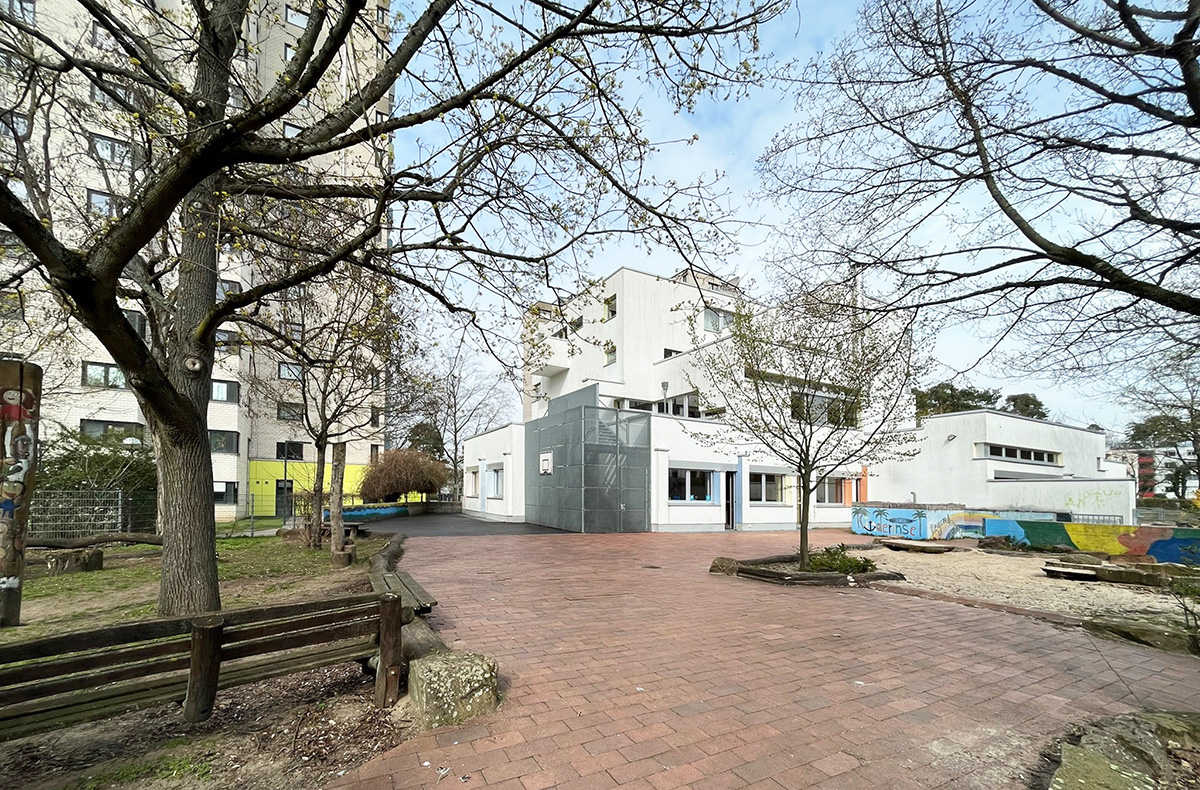
Kinderinsel, located in the Eberstadt district of Darmstadt, is housed in the ‘Haus der Vielfalt’, a community centre dating from the 1970s. The facility was not designed as a stand-alone nursery, but is situated on the ground floor of a multi-purpose building which, in addition to the nursery, also houses an after-school care centre, meeting rooms, advice centres, a youth centre and other social facilities. Between 2008 and 2012, the entire building envelope and the upper floors of the building were already renovated. The ground floor covers an area of approximately 600 square metres and houses a nursery with around 90 places, as well as an after-school care centre (20 places), which will be relocated to another site in the future.
In 2021, the City of Science, Darmstadt, issued a call for tenders under a VgV procedure for the planning services required to adapt the Kinderinsel to current spatial, functional and technical requirements. The aim was to modernise the existing facility in line with current needs whilst ensuring its long-term sustainability.
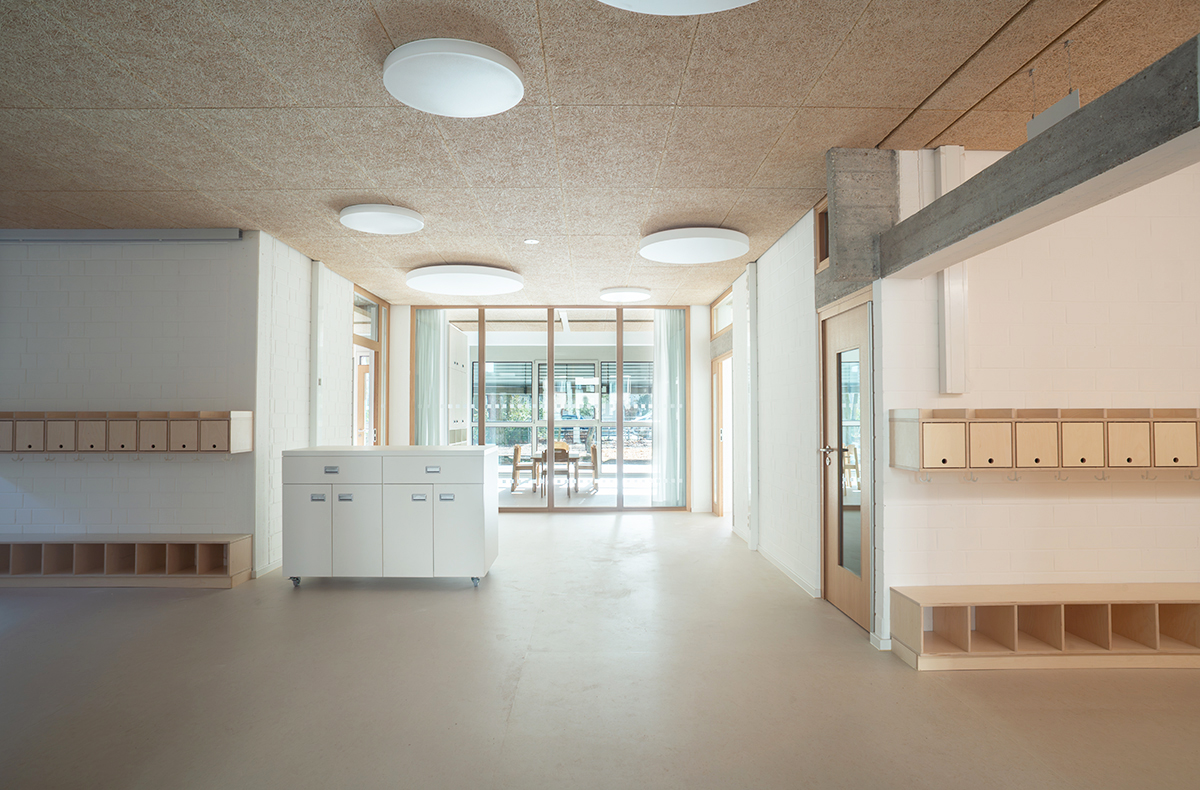
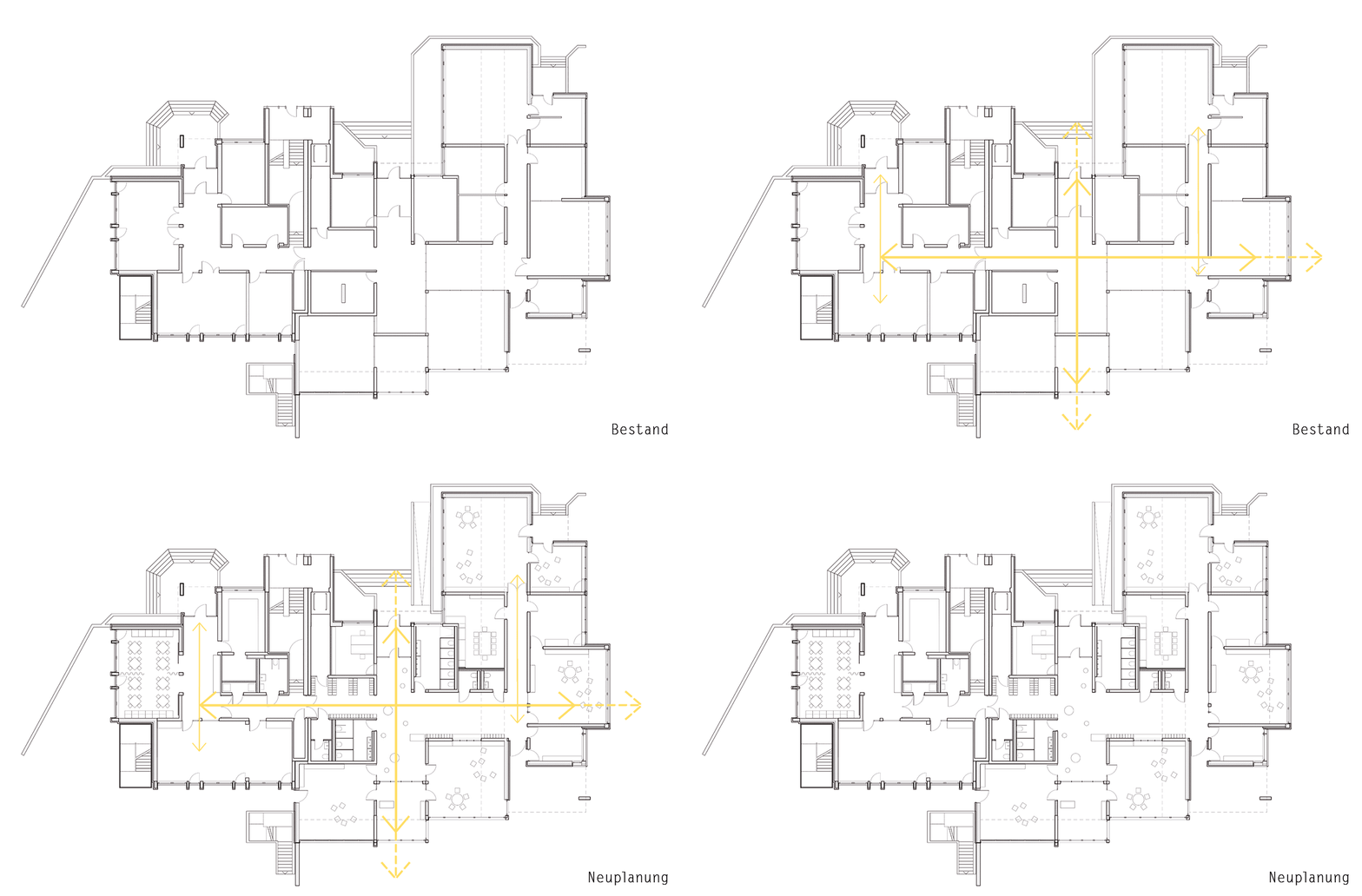
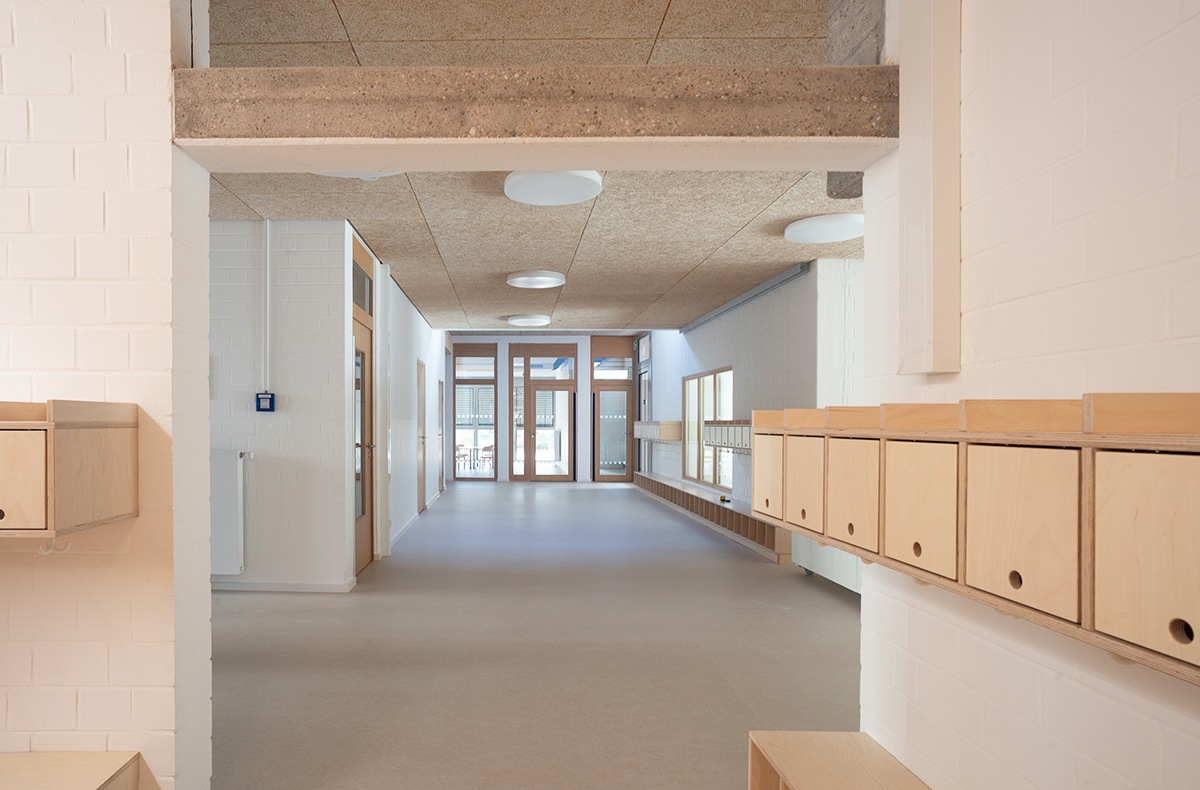
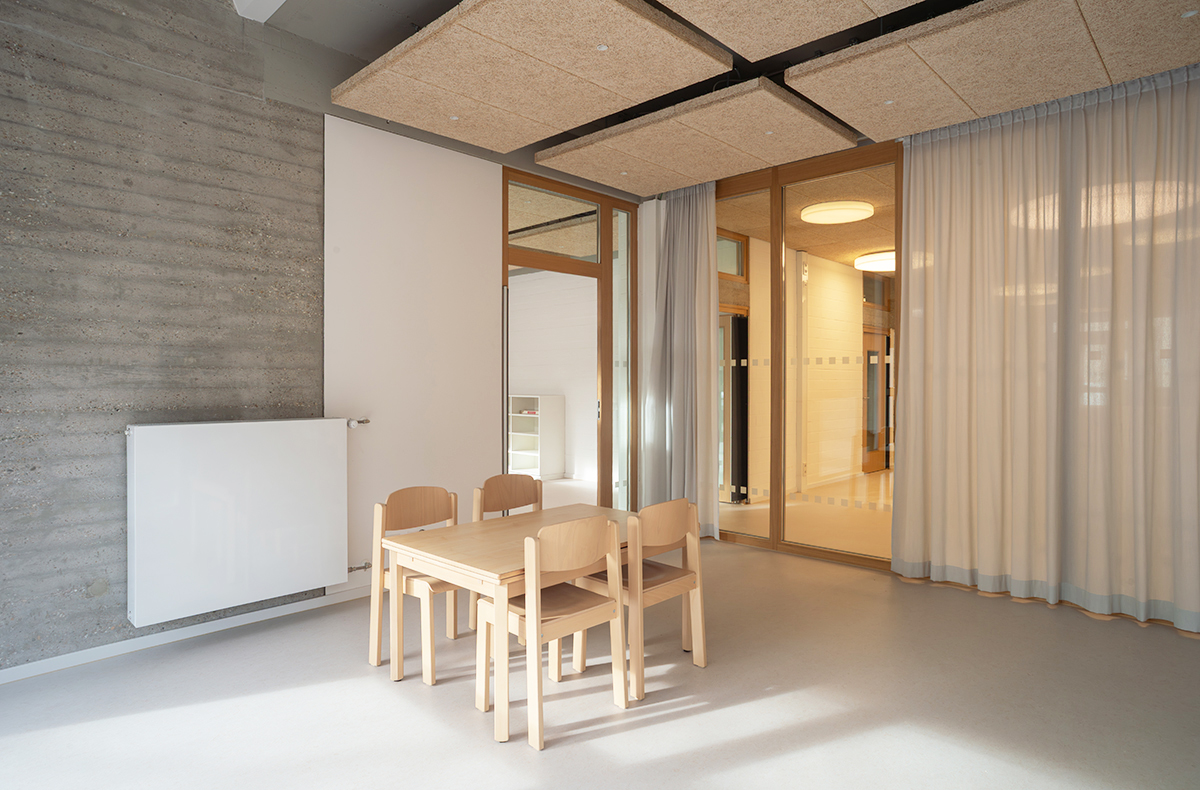
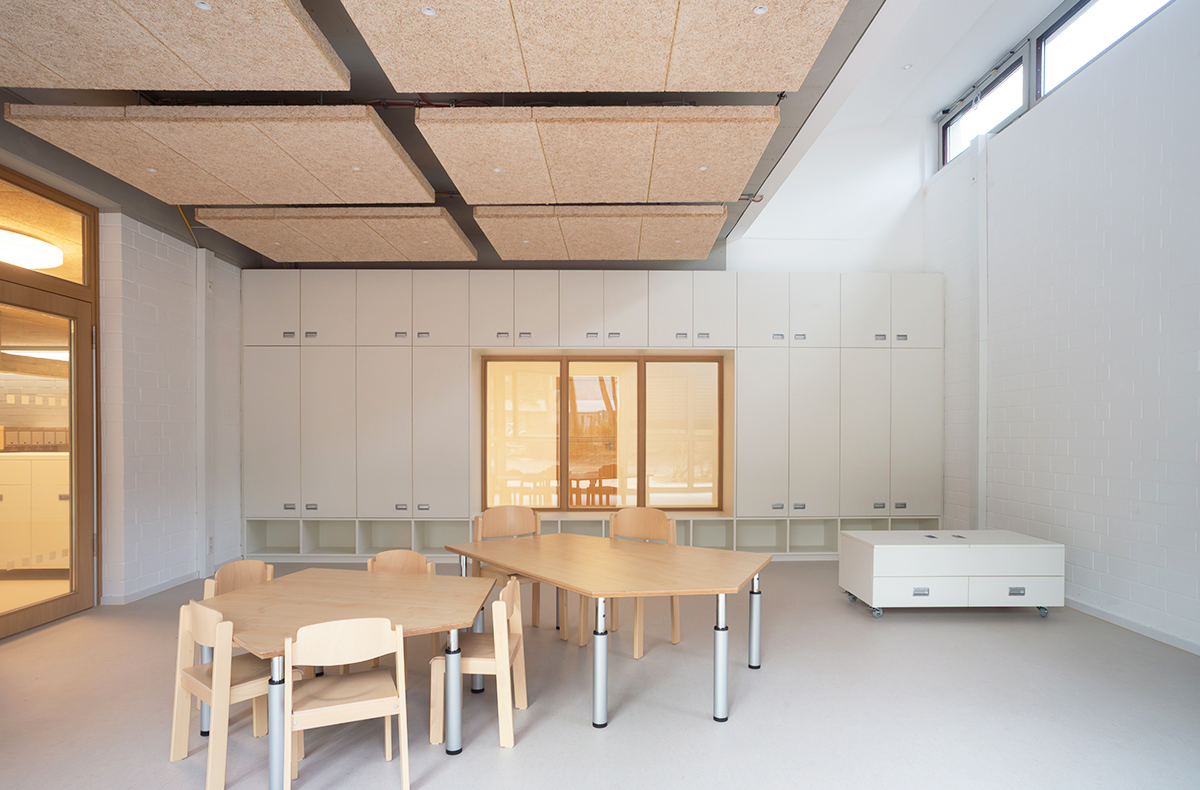
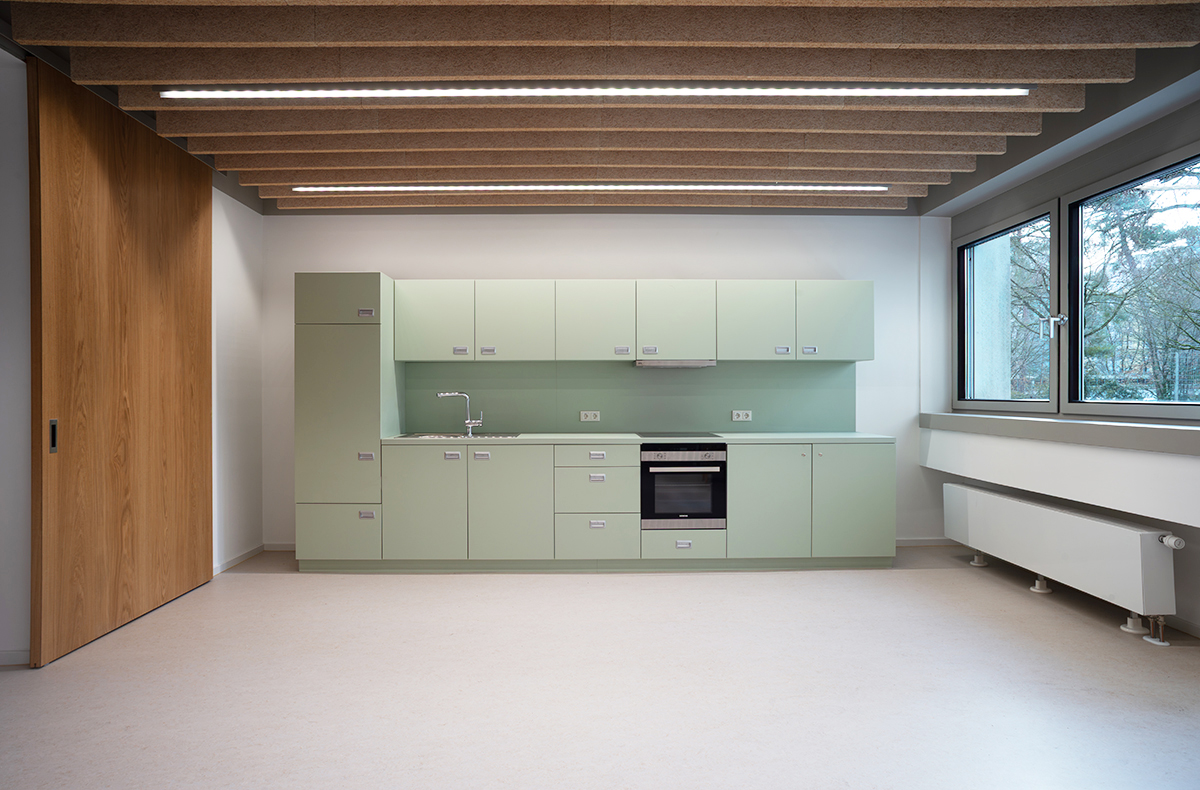
The architectural concept follows an approach of revitalising the existing building fabric dating from the 1970s. The aim is to preserve the structural qualities and characteristic materials of that era whilst bringing the building up to modern standards in terms of both functionality and energy efficiency. Distinctive elements such as exposed concrete surfaces, generous spans and modular floor plans are refurbished, supplemented and integrated into a contemporary usage concept. Through targeted interventions, a dialogue is created between the existing structure and new components, which respects the original architectural ethos whilst simultaneously creating new spatial qualities.
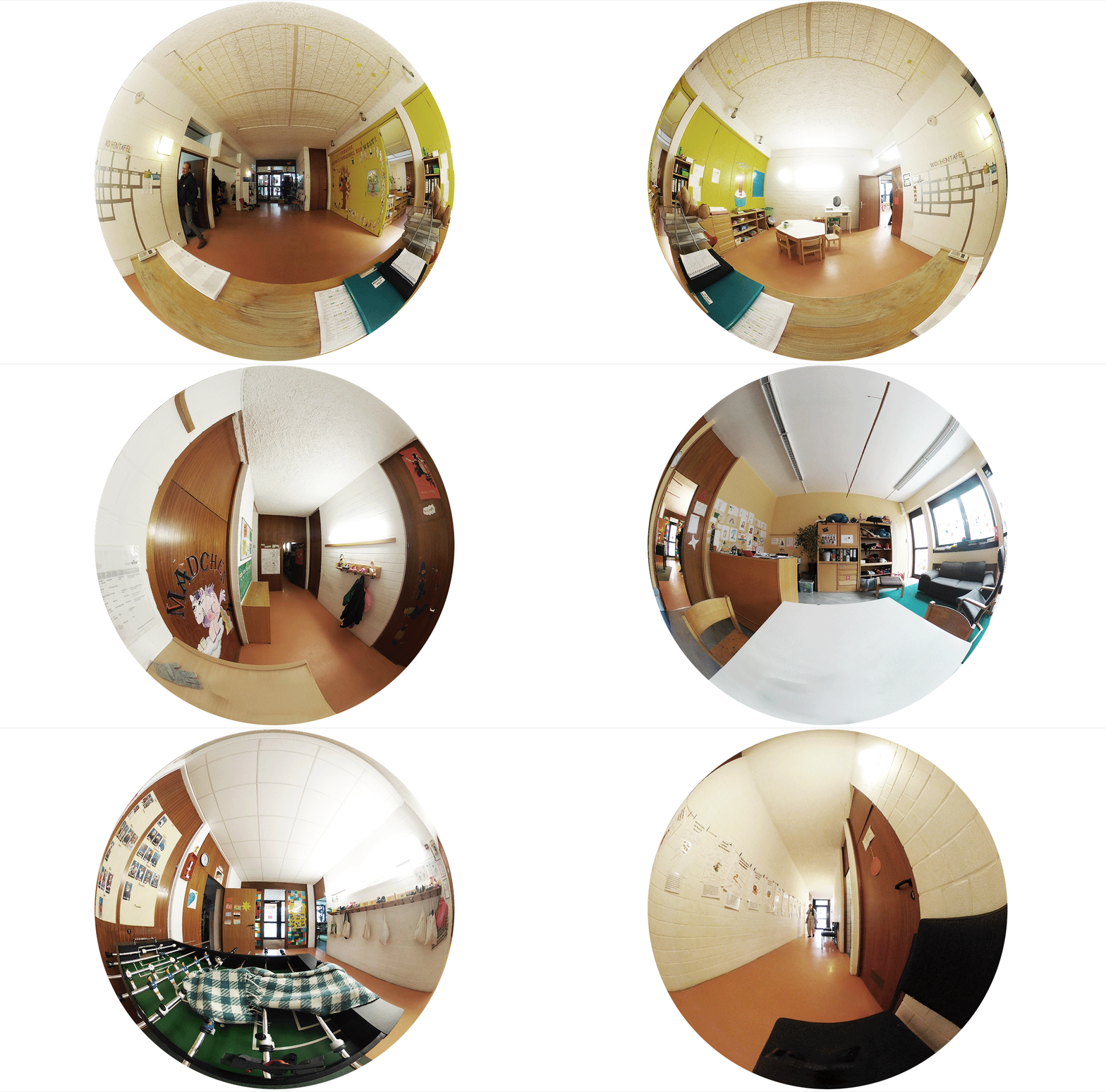
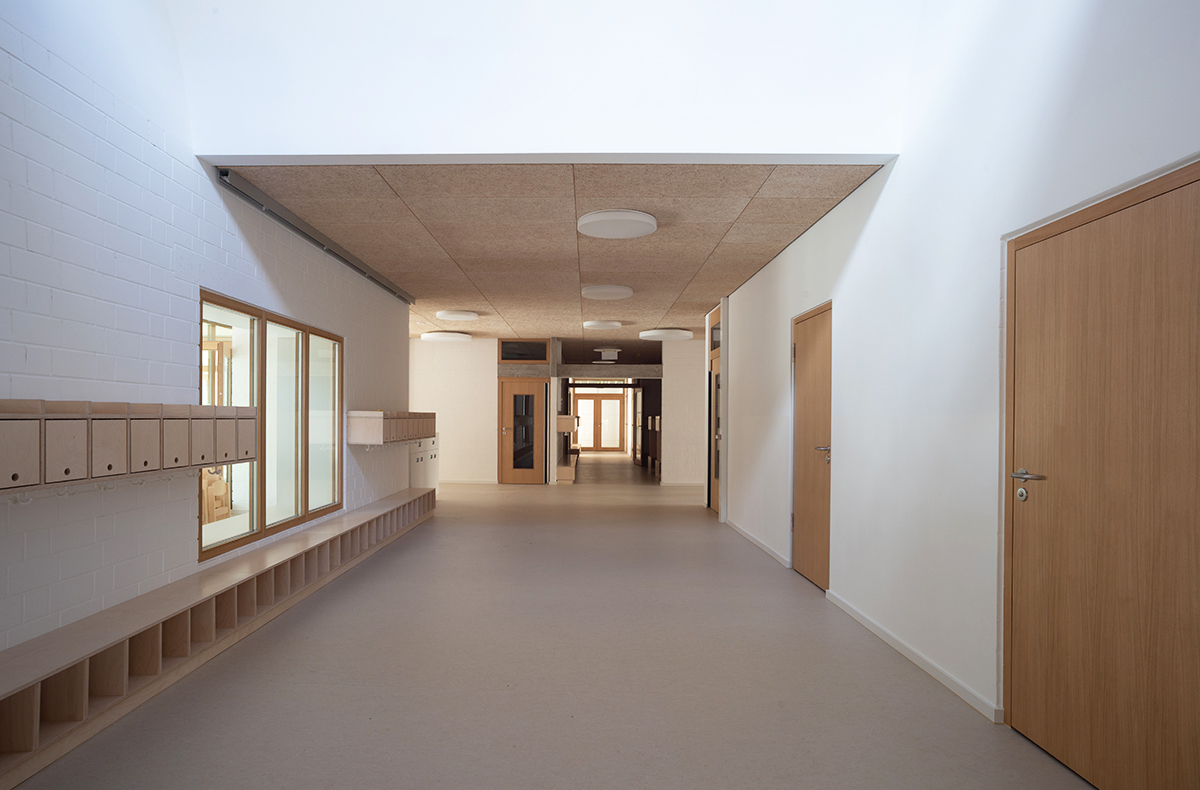
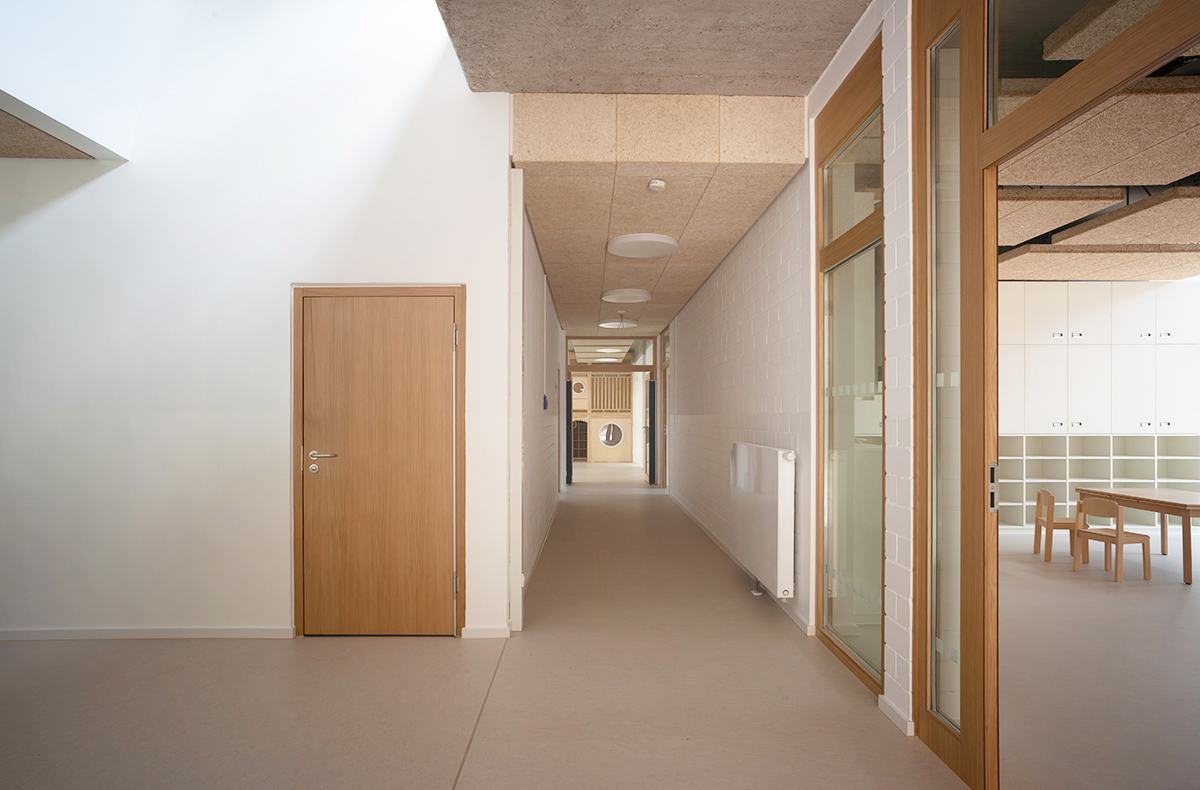
A key focus of the project was on improving orientation and indoor environmental factors: new sightlines to the exterior and new light wells ensure significantly improved natural lighting in the deeper areas of the floor plan, whilst also strengthening the spatial connection between the interior and exterior.
All measures were taken with a view to the sustainable reuse of the existing building structure. The structural framework, materials and surfaces are retained, repaired and integrated into the new design wherever possible. In this way, the grey energy stored in the existing structure can be utilised and resource consumption reduced.
The revitalisation pays tribute to the architectural language of the 1970s as an expression of a specific era in construction and society. Characteristic materials such as exposed concrete, clinker and timber panelling are carefully restored and, where necessary, supplemented. The aim of the measures is to preserve the authentic character of the existing building whilst sensitively integrating new usage requirements. Old and new do not compete with one another, but merge to form a clearly legible, timeless unity.
Kinderinsel, located in the Eberstadt district of Darmstadt, is housed in the ‘Haus der Vielfalt’, a community centre dating from the 1970s. The facility was not designed as a stand-alone nursery, but is situated on the ground floor of a multi-purpose building which, in addition to the nursery, also houses an after-school care centre, meeting rooms, advice centres, a youth centre and other social facilities. Between 2008 and 2012, the entire building envelope and the upper floors of the building were already renovated. The ground floor covers an area of approximately 600 square metres and houses a nursery with around 90 places, as well as an after-school care centre (20 places), which will be relocated to another site in the future.
In 2021, the City of Science, Darmstadt, issued a call for tenders under a VgV procedure for the planning services required to adapt the Kinderinsel to current spatial, functional and technical requirements. The aim was to modernise the existing facility in line with current needs whilst ensuring its long-term sustainability.
The architectural concept follows an approach of revitalising the existing building fabric dating from the 1970s. The aim is to preserve the structural qualities and characteristic materials of that era whilst bringing the building up to modern standards in terms of both functionality and energy efficiency. Distinctive elements such as exposed concrete surfaces, generous spans and modular floor plans are refurbished, supplemented and integrated into a contemporary usage concept. Through targeted interventions, a dialogue is created between the existing structure and new components, which respects the original architectural ethos whilst simultaneously creating new spatial qualities.
A key focus of the project was on improving orientation and indoor environmental factors: new sightlines to the exterior and new light wells ensure significantly improved natural lighting in the deeper areas of the floor plan, whilst also strengthening the spatial connection between the interior and exterior.
All measures were taken with a view to the sustainable reuse of the existing building structure. The structural framework, materials and surfaces are retained, repaired and integrated into the new design wherever possible. In this way, the grey energy stored in the existing structure can be utilised and resource consumption reduced.
The revitalisation pays tribute to the architectural language of the 1970s as an expression of a specific era in construction and society. Characteristic materials such as exposed concrete, clinker and timber panelling are carefully restored and, where necessary, supplemented. The aim of the measures is to preserve the authentic character of the existing building whilst sensitively integrating new usage requirements. Old and new do not compete with one another, but merge to form a clearly legible, timeless unity.