task:
New construction of a footpath and cycle path bridge over the Danube
client:
City of Neu-Ulm
procedure type:
competition for realization 2025, third prize
cooperation
netzwerkarchitekten, Darmstadt | Dr. Schütz Ingenieure, Kempten | Y-LA Ando Yoo, Hamburg
size:
95 m (span)
team:
Martin Junglas, Josephine Pavesi
visualizations:
luxfeld digital art, Darmstadt
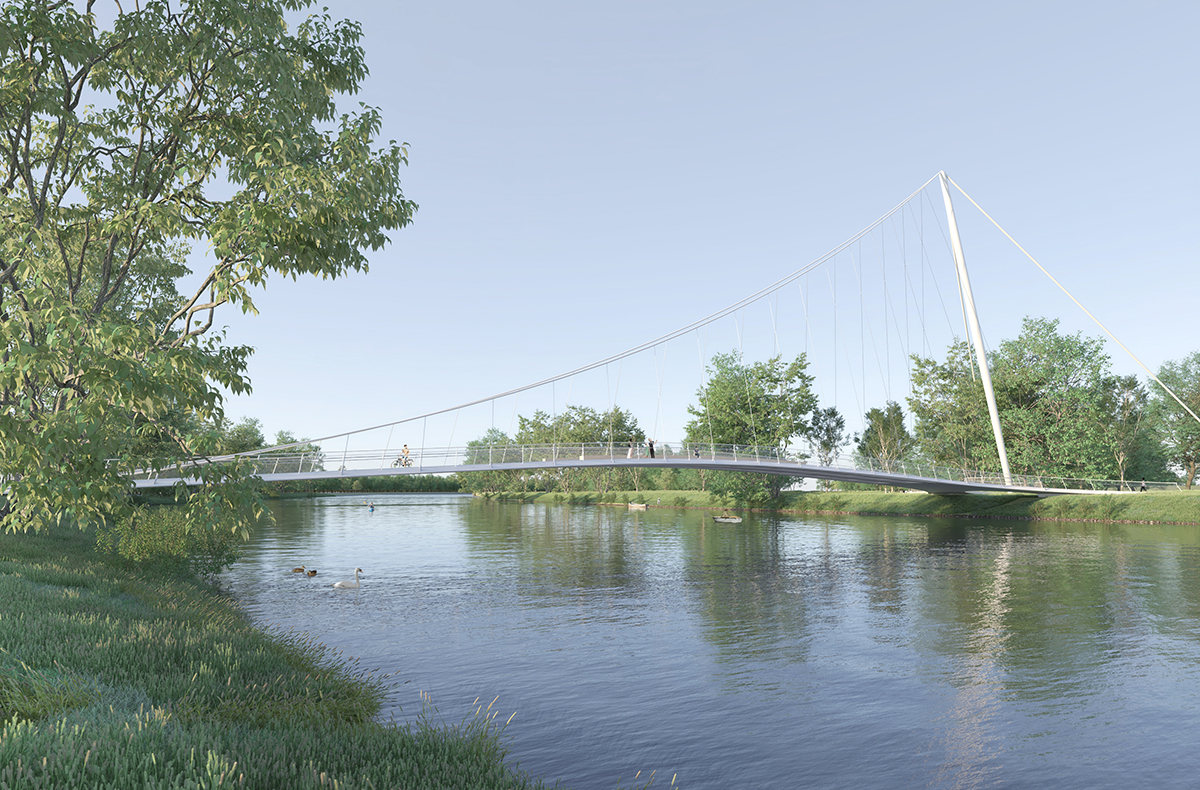
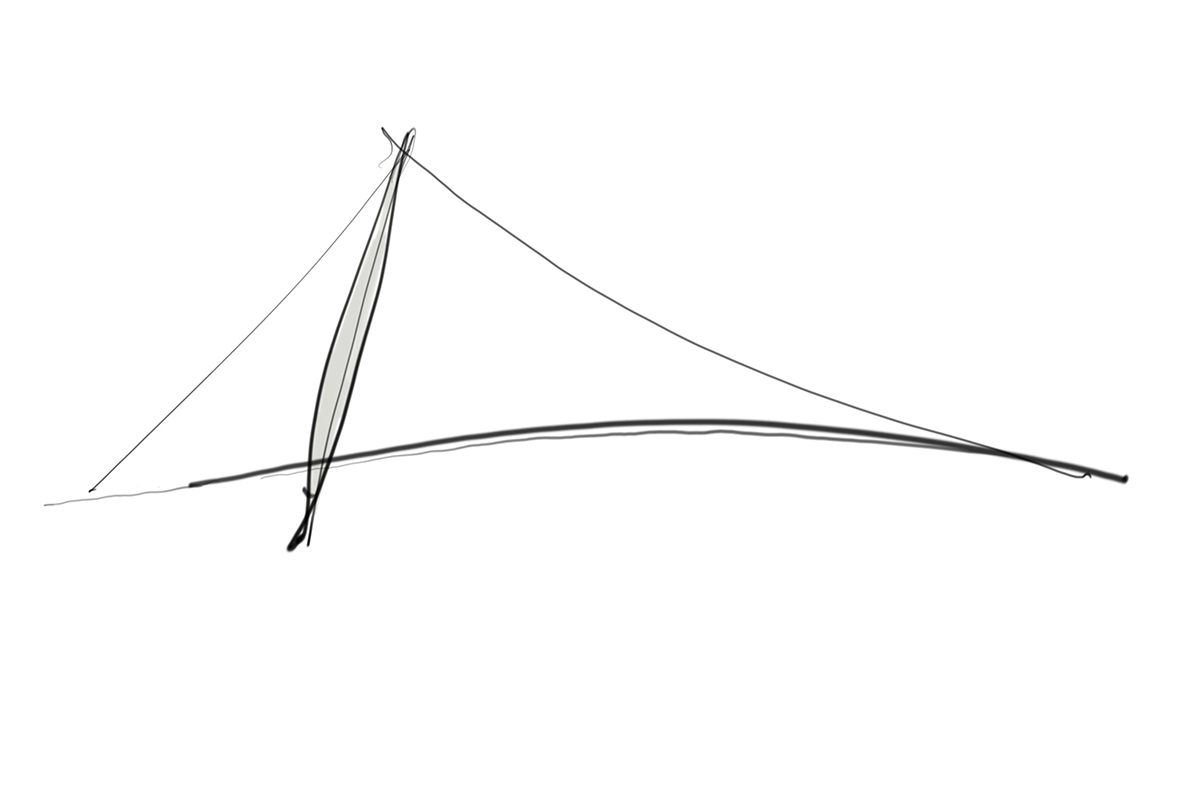
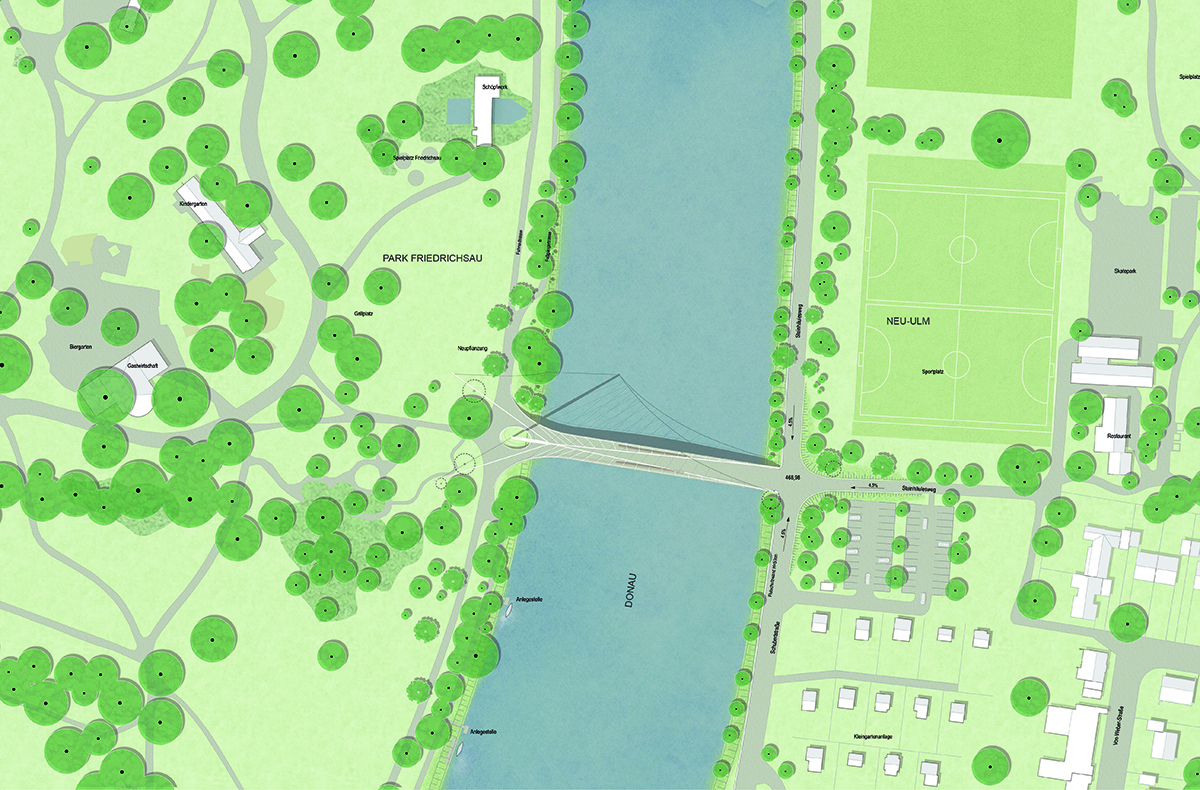
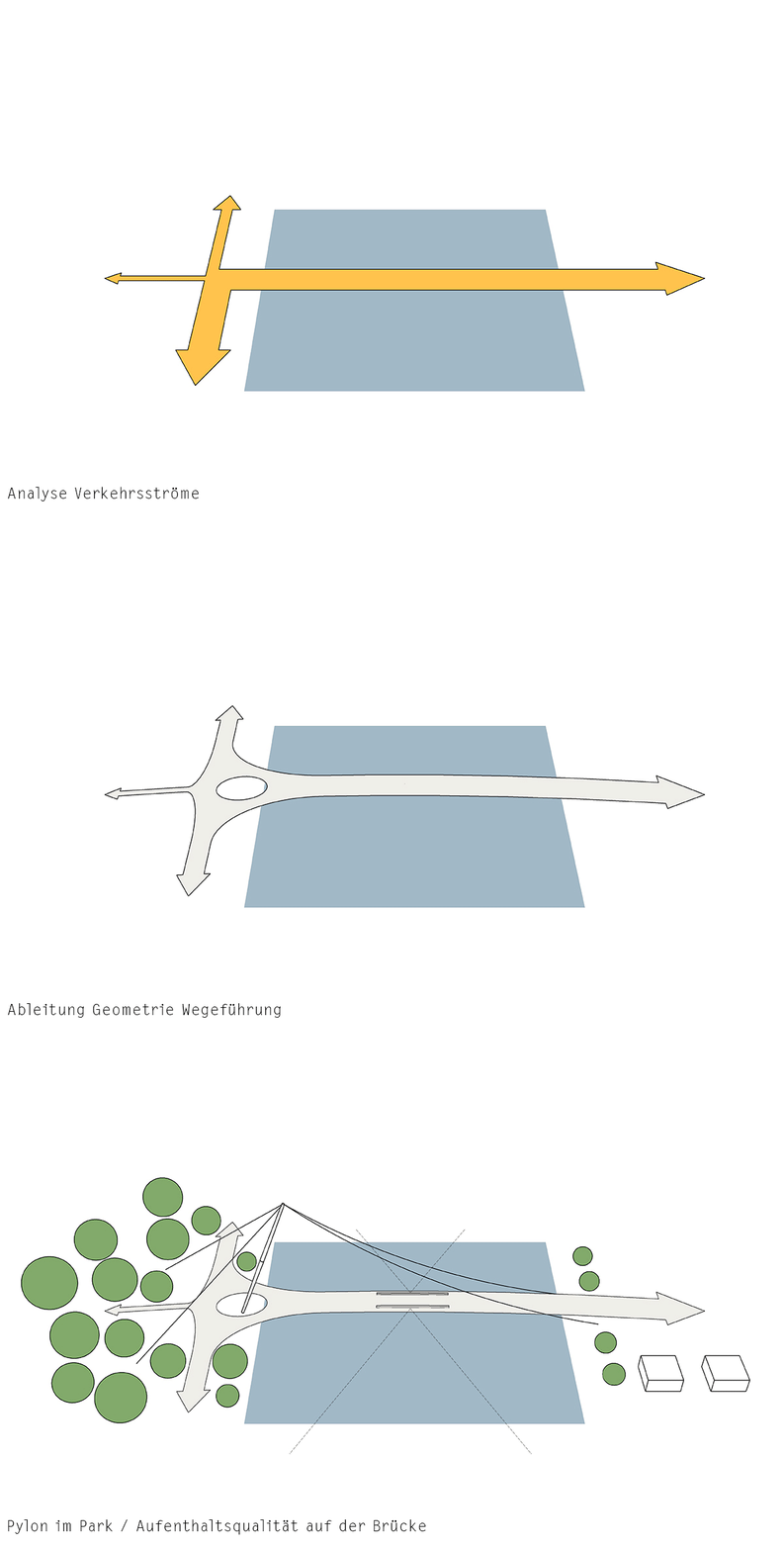
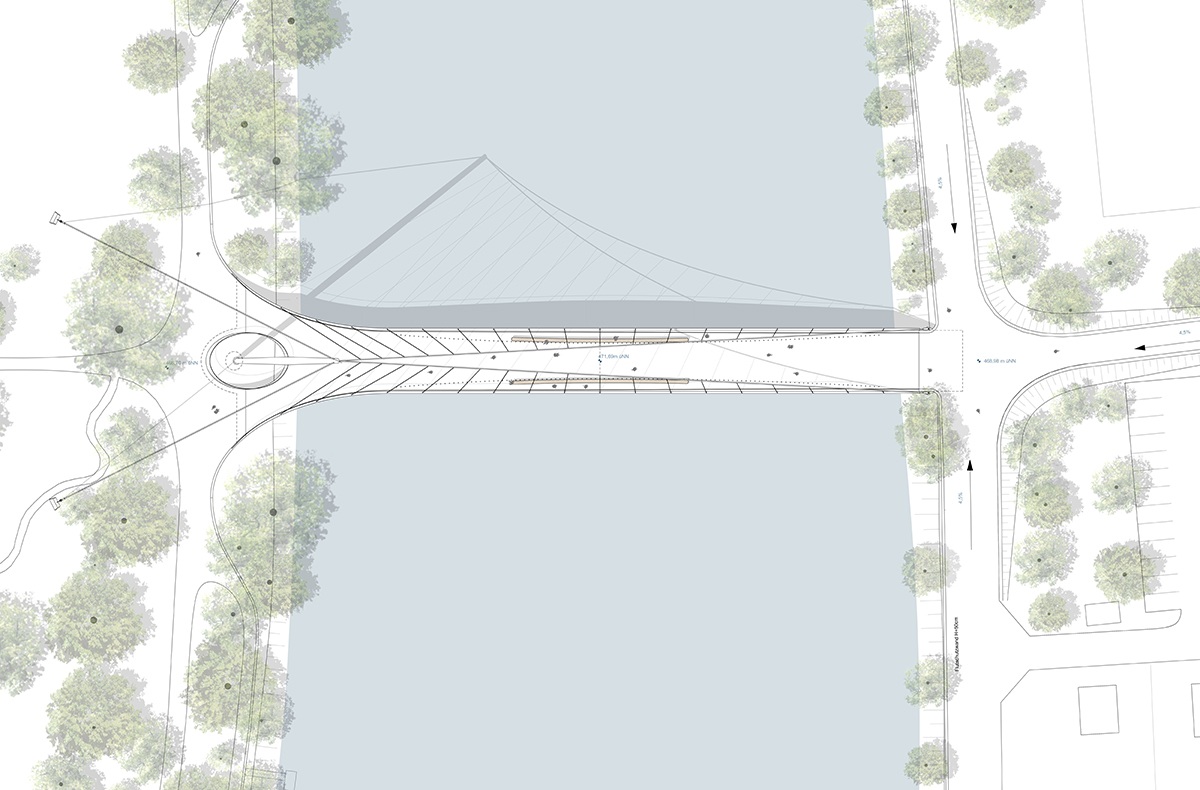
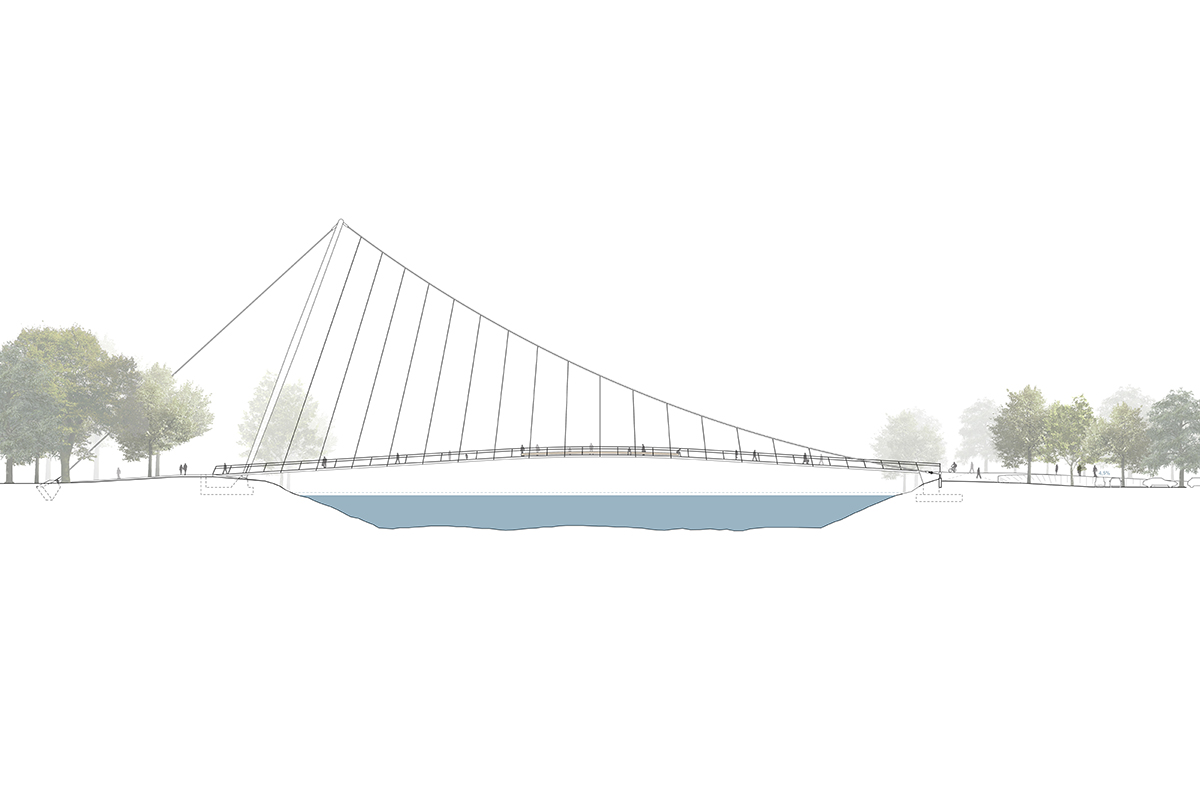
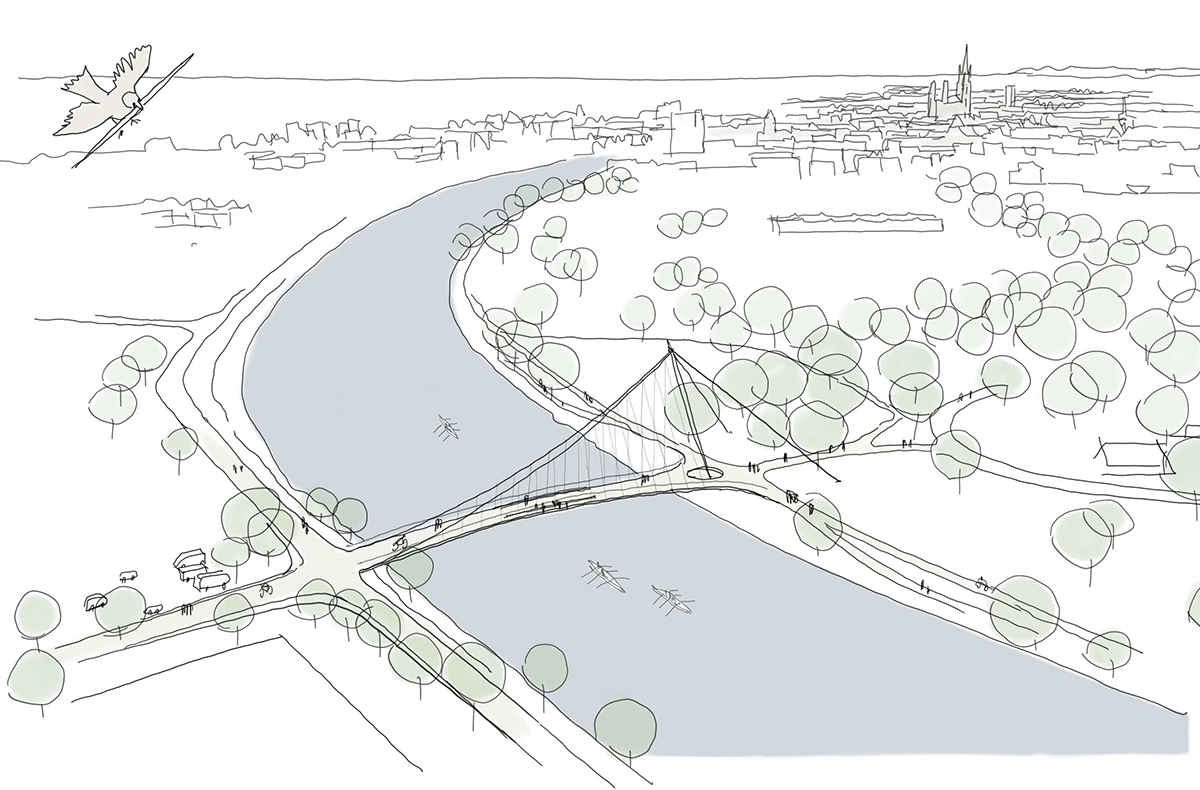
The new Friedrichsau bridge spans the Danube at the same location as the existing bridge, which is to be dismantled, and connects the Friedrichsau parkland in the west, which belongs to the city of Ulm, with the Neu-Ulm district of Offenhausen in the east. The new bridge is designed as a slender steel suspension bridge with a single-sided, sloping pylon. Positioned on the western side of the park, the pylon blends sensitively into the tree-lined landscape and at the same time gives the bridge a distinctive, identity-creating presence: its sloping position acts as a welcoming gesture to the Neu-Ulm side.
To ensure barrier-free use, the bridge gradient has a maximum ramp inclination of 6% and is designed to be mirror-symmetrical in the longitudinal direction. In the middle of the bridge, a gentle gradient curve mediates between the two directions of slope. To ensure safe boat passage despite the constant height, the eastern bank paths are raised by around 1 metre. Here, the alignment of the bridge picks up the preferred cycle route towards the east.
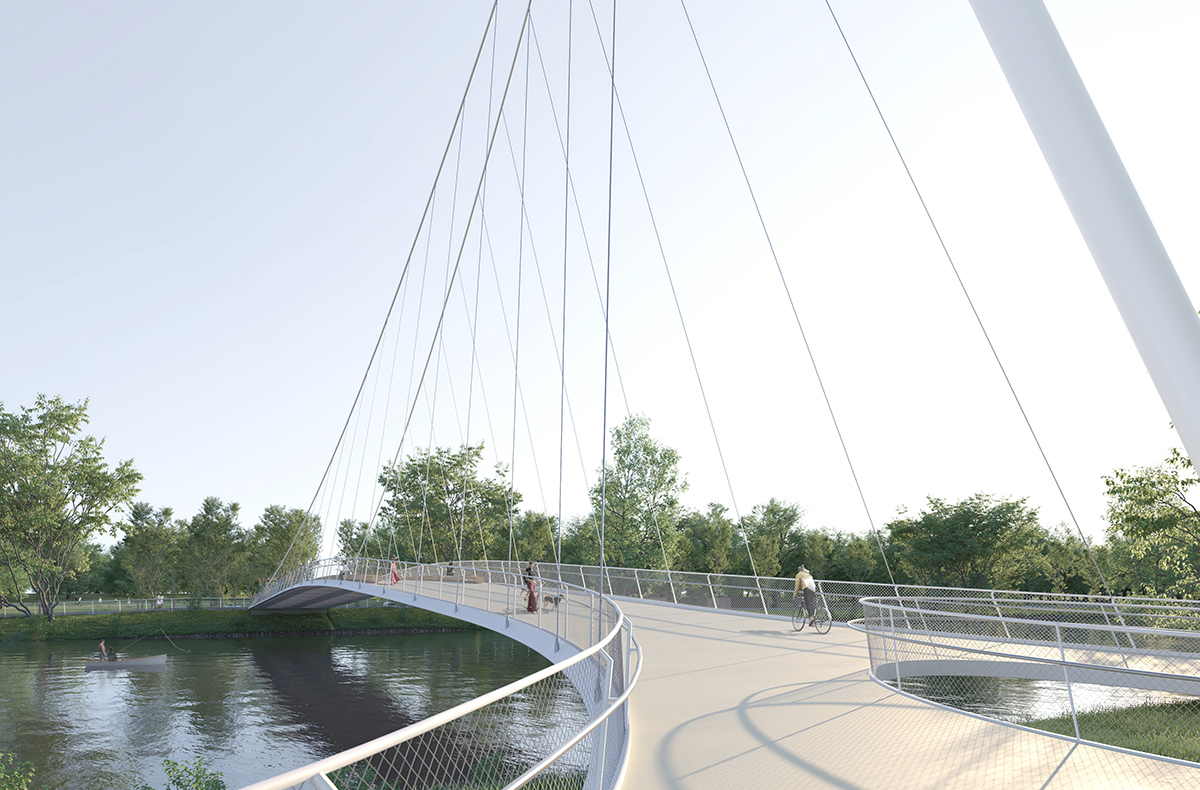
In the west, an elliptical cut-out in the bridge contour creates a fork in the path, which harmoniously directs traffic flows into the park landscape’s network of paths while dynamically incorporating the main cycle route to the south. The elliptical bridge eye accommodates the base of the pylon construction and is sensitively embedded in the bank area.
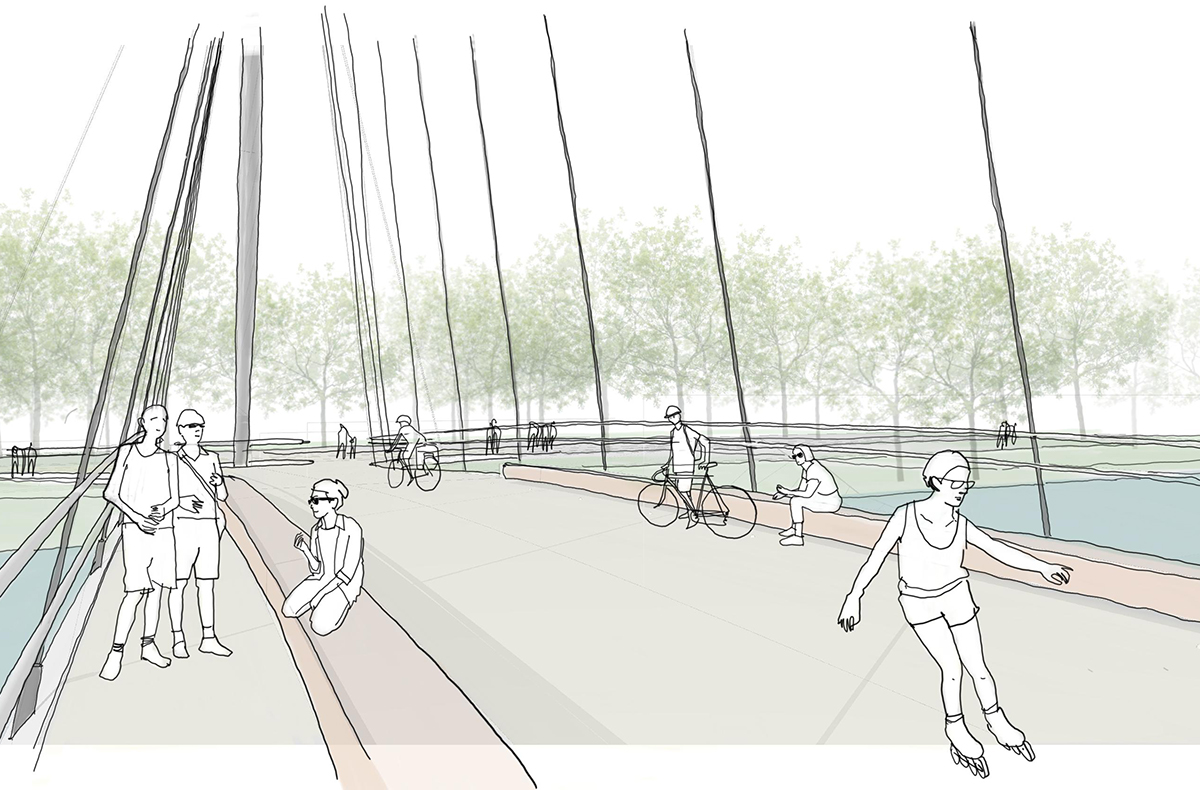
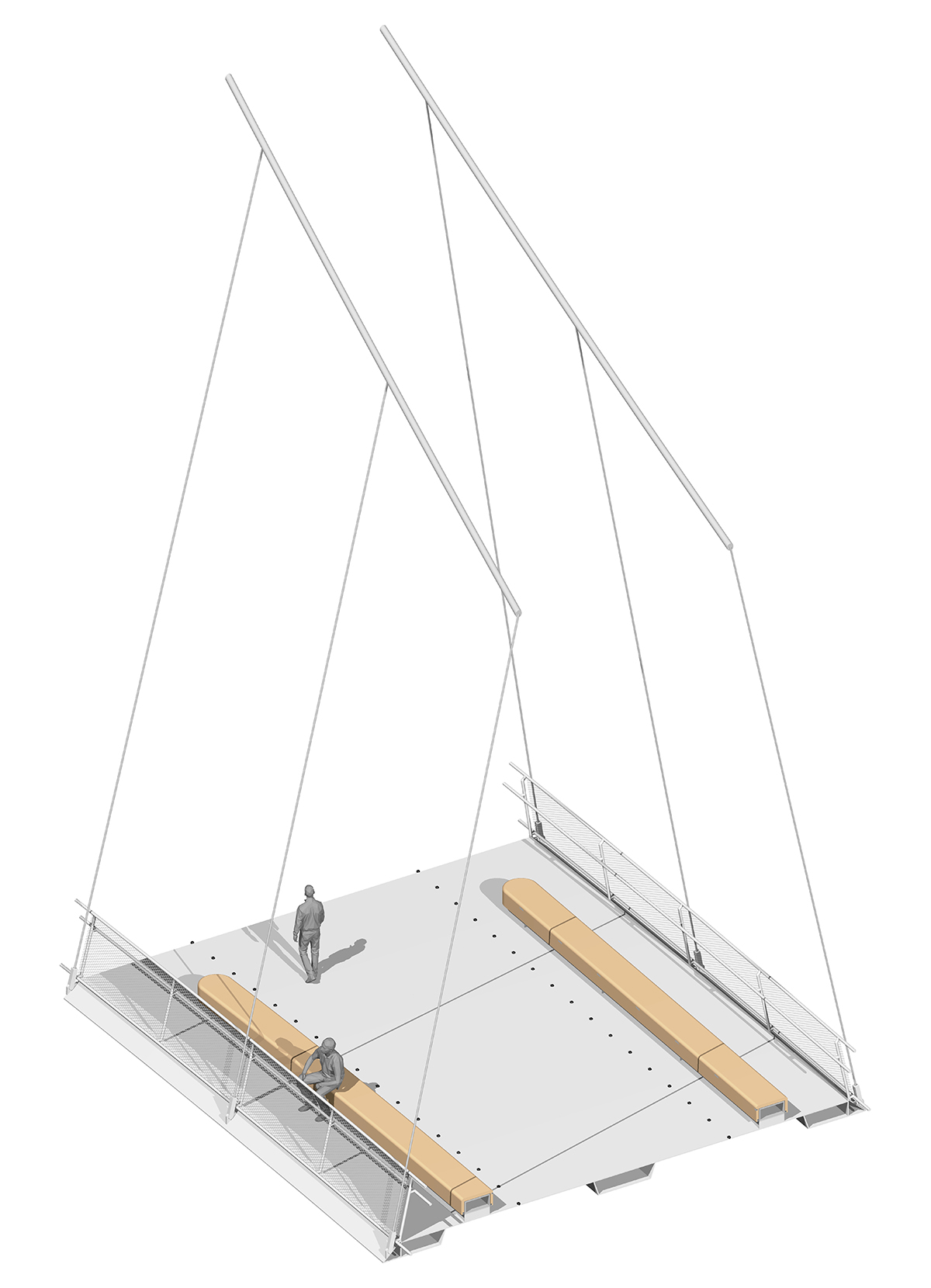
In the middle of the Danube, at the border between Baden-Württemberg and Bavaria, a lounge area with benches is being created on the bridge, inviting visitors to linger and enjoy the river surroundings. The bridge is 5.4 metres wide between the benches on either side. At the eastern end, it widens to 7.8 metres to accommodate the mixed traffic of pedestrians and cyclists at the intersection. The bridge also opens up to the west, with the path through the bridge eye blending harmoniously into the landscape.
The new Friedrichsau bridge spans the Danube at the same location as the existing bridge, which is to be dismantled, and connects the Friedrichsau parkland in the west, which belongs to the city of Ulm, with the Neu-Ulm district of Offenhausen in the east. The new bridge is designed as a slender steel suspension bridge with a single-sided, sloping pylon. Positioned on the western side of the park, the pylon blends sensitively into the tree-lined landscape and at the same time gives the bridge a distinctive, identity-creating presence: its sloping position acts as a welcoming gesture to the Neu-Ulm side.
To ensure barrier-free use, the bridge gradient has a maximum ramp inclination of 6% and is designed to be mirror-symmetrical in the longitudinal direction. In the middle of the bridge, a gentle gradient curve mediates between the two directions of slope. To ensure safe boat passage despite the constant height, the eastern bank paths are raised by around 1 metre. Here, the alignment of the bridge picks up the preferred cycle route towards the east.
In the west, an elliptical cut-out in the bridge contour creates a fork in the path, which harmoniously directs traffic flows into the park landscape’s network of paths while dynamically incorporating the main cycle route to the south. The elliptical bridge eye accommodates the base of the pylon construction and is sensitively embedded in the bank area.
In the middle of the Danube, at the border between Baden-Württemberg and Bavaria, a lounge area with benches is being created on the bridge, inviting visitors to linger and enjoy the river surroundings. The bridge is 5.4 metres wide between the benches on either side. At the eastern end, it widens to 7.8 metres to accommodate the mixed traffic of pedestrians and cyclists at the intersection. The bridge also opens up to the west, with the path through the bridge eye blending harmoniously into the landscape.